You turn the key, the engine fires up, the lights come on, and everything just works. Behind the scenes, your alternator is doing a lot of that heavy lifting.
The alternator's job is to keep your battery charged and power your vehicle's electrical systems while the engine is running. Headlights, blower motor, heated seats, radio, power windows, ignition system, fuel system - they all rely on consistent voltage from the alternator.
When the alternator starts to fail, your battery becomes a temporary band-aid. It will keep things going for a short time, but once the battery drains, the car or truck will stall or refuse to restart. That is why catching alternator symptoms early is so important if you want to avoid getting stranded in West Jordan traffic or on a weekend trip across the Salt Lake Valley.
Early Warning Signs Your Alternator Is Failing
When drivers in West Jordan ask us about bad alternator symptoms, we usually find the signs started weeks before the car finally died. Here is what you should be watching for.
Electrical Symptoms You Should Never Ignore
These are often the very first clues that your alternator is not keeping up:
Dim or flickering headlights
Headlights that get brighter when you rev the engine and dim at idle are a classic alternator warning. The alternator is struggling to provide steady power.
Dashboard lights acting strange
You might see the battery light, charging light, or "ALT" warning lamp come on. Sometimes it flickers, sometimes it stays solid. Either way, it is your car's way of saying the charging system needs attention.
Electronics cutting in and out
Power windows slowing down, the radio shutting off randomly, flickering interior lights, or a blower fan that changes speed on its own all point to voltage issues.
Weak or dead battery after short drives
If the battery keeps dying even though it is fairly new, the alternator may not be charging it correctly.
Performance And Drivability Symptoms
A failing alternator does not just affect lights. It can change the way your vehicle drives:
Hard starting or repeated jump starts
You may need a jump to get going, then the car runs fine for a bit, then it is dead again. That cycle often means the alternator is not refilling the battery.
Rough running or stalling
Modern engines rely on stable electrical power for fuel injectors, ignition coils, sensors, and the engine computer. Low voltage can cause misfires, rough idle, or sudden stalling at stoplights.
Warning messages on the dash
You might see charging system warnings, multiple system errors, or "limp mode" behavior when the voltage drops too low.
Visual And Sound Clues Around The Engine Bay
Sometimes you can literally see or hear alternator problems while the engine is running:
Grinding or whining noises
A worn alternator bearing or internal damage can create a high pitched whine or grinding sound that changes with engine speed.
Burning rubber or hot electrical smell
An alternator that is working too hard or has a slipping belt can overheat. You might notice a hot, electrical, or burnt smell from the front of the engine.
Loose or glazed belt
The drive belt that spins the alternator can stretch, crack, or glaze. If it is slipping, the alternator will not charge properly even if the unit itself is still good.
Any one of these symptoms is worth checking. When several show up together, we treat it as urgent and recommend you have the vehicle looked at before it leaves you stranded.
Bad Alternator Or Bad Battery: How To Tell The Difference
Alternator issues and battery issues often look very similar on the surface. That is why so many people buy a new battery, only to end up stuck again a week later.
Here is how we usually separate the two in the shop:
Battery problems often show up at start up
If the car cranks slowly in the morning but then runs fine all day, that can point to a weak or old battery. Especially if all the lights are bright once it is running.
Alternator problems usually get worse as you drive
You might start the car with no issues, then after 10 or 20 minutes the lights dim, electronics fail, or the car stalls. That usually means the alternator is not keeping the system charged.
Jump start behavior is a big clue
If a jump start gets you going and the car keeps running for a long drive, the alternator is probably doing its job and the battery is suspect. If it dies again quickly, the alternator may not be charging.
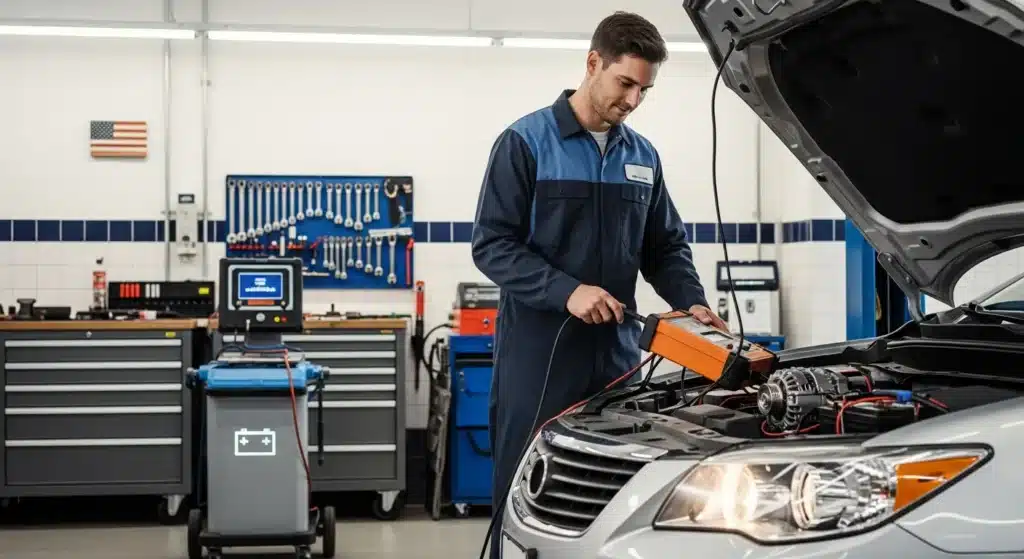
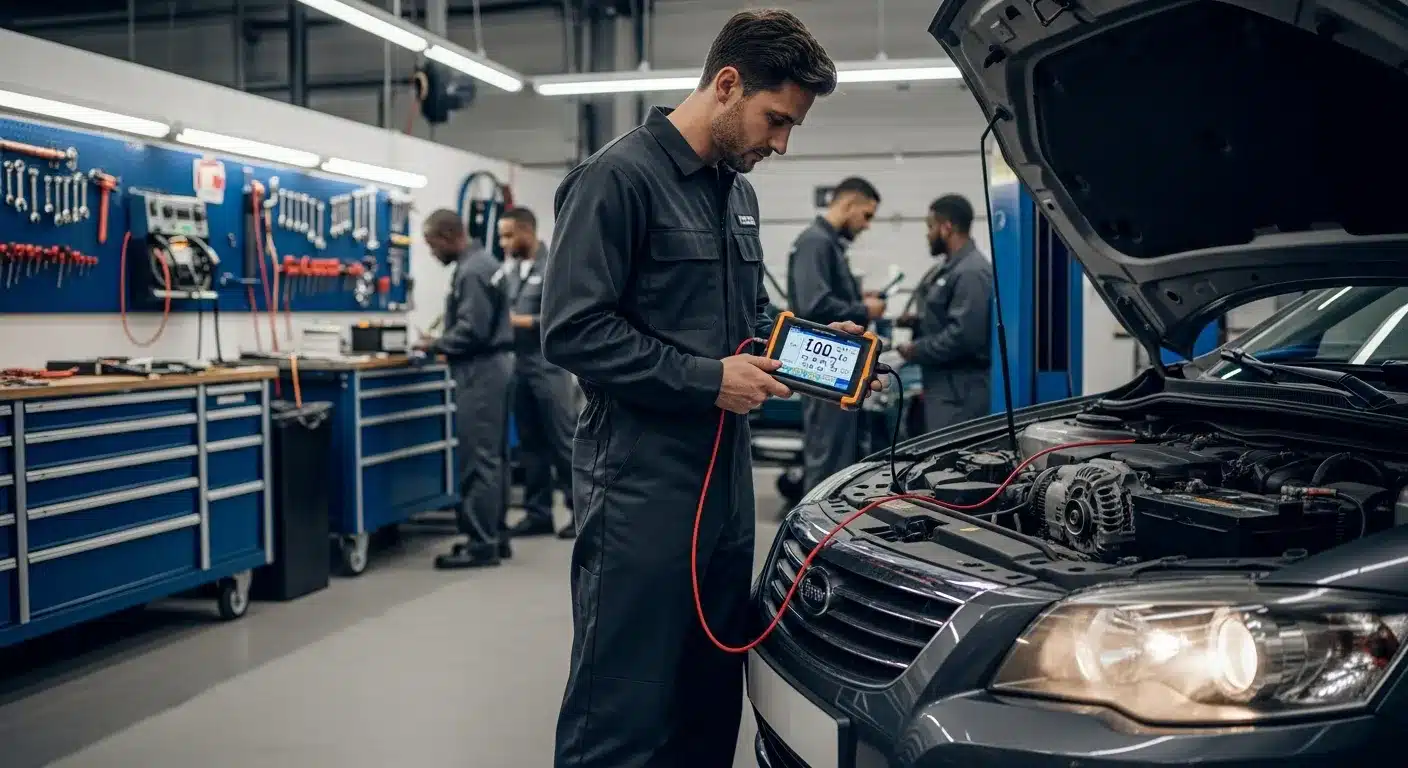
In our West Jordan shop, we never guess. We use a charging system tester to check:
Battery health and capacity
Alternator output under load
Voltage drops in cables and connections
That simple test saves you from buying the wrong part and helps us fix the real root cause instead of chasing symptoms.
Why Ignoring Alternator Problems Can Cost You More
It is tempting to ignore a flickering light or an occasional hard start, especially when the car eventually starts and drives. The problem is that charging system issues almost never fix themselves.
Putting off alternator service can lead to:
Unexpected breakdowns
Alternators often fail completely with very little warning once they reach a certain point. That can leave you stuck on the side of the road, late to work, or stranded on a weekend trip.
Damaged battery
Constantly running a battery down and recharging it is hard on it. A weak alternator can shorten battery life significantly, turning one problem into two.
Electrical damage
Voltage that is too low or, in some cases, too high can stress sensitive electronics like the engine computer and modules. Those parts are far more expensive than an alternator.
Towing and emergency costs
A tow across the Salt Lake Valley, missed time at work, or after hours emergency repairs quickly add up.
What this really means is that early diagnosis is almost always cheaper and less stressful than waiting until the car quits altogether. If your vehicle is showing the bad alternator symptoms we described, it is the right time to have a professional take a look.
How Professionals Diagnose And Repair Alternator Issues
At Ace Auto Repair in West Jordan, we see charging system problems every week. The process we use is designed to be accurate, fast, and transparent so you know exactly what is going on with your car or truck.
Why Professional Service Is Safer Than DIY Fixes
Alternators are often buried behind other components, tied into complex wiring, and controlled by your vehicle's computer. Modern systems are not as simple as unplugging one unit and bolting on another.
Here is why we recommend professional service instead of DIY for alternator issues:
Accurate diagnosis
A loose ground, a bad cable, a slipping belt, or a weak battery can all look like a failing alternator. Swapping parts without testing wastes money and time.
Protecting sensitive electronics
Incorrect jump starting, poor connections, or the wrong alternator for your vehicle can damage control modules and other electronics.
Proper tools and specs
We use professional meters, load testers, and manufacturer specifications to be sure the system is working correctly, not just "good enough."
Safety
Working around a running engine with spinning belts and high current wiring is not something to take lightly. Our techs are trained and equipped to do it safely.
What To Expect During An Alternator Inspection
When you bring a car or truck to us with possible alternator problems, here is how we typically handle it:
Listen to your symptoms
We ask what you have noticed: dim lights, stalling, new noises, warning lights, or recent battery replacements. Those details help us pinpoint the issue faster.
Visual and belt inspection
We check the alternator, belt condition and tension, connections, and for any signs of overheating or damage.
Battery and charging test
Using diagnostic equipment, we test:
Battery state of charge and health
Alternator output at idle and higher RPM
How the system behaves under electrical load
Electrical system check
If needed, we look for voltage drops, corroded cables, or wiring problems that could be affecting charging.
Clear explanation and free quote
Once we know exactly what is going on, we explain it in plain language: what needs attention now, what can wait, and what it will cost. We provide a free repair quote before any work starts.
If the alternator does need replacement, we use quality parts, install them to spec, and recheck the entire charging system before we hand the keys back. Our goal is that you leave confident your vehicle will start and run reliably.
Schedule Professional Alternator Service Today
If you are noticing dim headlights, strange electrical behavior, or repeated dead batteries, your alternator is trying to tell you something. The sooner we take a look, the more likely we can prevent bigger problems and higher costs.
At Ace Auto Repair, our certified mechanics help drivers in West Jordan and across the Salt Lake Valley with everything from minor charging issues to full alternator replacement. We back our work, keep our pricing transparent, and always explain our findings before any repair starts.
If your vehicle is showing any of the bad alternator symptoms we covered, give us a call at (801) 803-6016 or contact us to get your free repair quote and schedule service. We will treat your car or truck like it is our own and help you get back on the road feeling safe and confident.
Key Takeaways
Common bad alternator symptoms include dim or flickering headlights, warning lights on the dash, and electronics that cut in and out while driving.
A weak or repeatedly dead battery after short trips often points to alternator trouble, especially if the battery is fairly new and properly installed.
Drivability issues like hard starting, rough running, stalling, or “limp mode” can occur when a failing alternator starves modern engine electronics of stable voltage.
Grinding or whining noises, a burning rubber or hot electrical smell, and a loose or glazed drive belt are visual and sound clues that the alternator is struggling.
Alternator problems usually worsen the longer you drive, unlike battery issues that show mainly at startup, so professional testing is the safest way to confirm the true cause.
Ignoring bad alternator symptoms can lead to breakdowns, a ruined battery, possible electrical damage, and higher costs for towing and emergency repairs.
Frequently Asked Questions About the Symptoms of a Bad Alternator
What are the most common symptoms of a bad alternator?
Common symptoms of a bad alternator include dim or flickering headlights, warning lights like the battery or ALT light on the dash, slow or failing power windows, electronics cutting out, repeated dead batteries, rough running or stalling, and unusual whining or grinding noises from the engine area.
How can I tell if it’s a bad alternator or a bad battery?
Battery problemsusually show up at startup, such as slow cranking in the morning but normal operation once running. Symptoms of a bad alternator typically worsen as you drive: lights dimming, electronics failing, or stalling after 10–20 minutes. A charging system test is the most reliable way to know for sure.
Can I keep driving if I notice symptoms of a bad alternator?
Driving with bad alternator symptoms is risky. Once the alternator can’t charge the battery, the vehicle may suddenly stall and refuse to restart, leaving you stranded. Continuing to drive can also damage the battery and sensitive electronics. It’s best to have the charging system checked as soon as possible.
What happens if I ignore alternator warning signs?
Ignoring early symptoms of a failing alternator can lead to unexpected breakdowns, a ruined battery from repeated deep discharges, and possible damage to electronic control modules from improper voltage. You may also face towing costs and emergency repair bills that are more expensive than early, scheduled service.
How long does a car alternator usually last?
Most alternators last between about 80,000 and 150,000 miles, depending on driving conditions, electrical load, and maintenance. Short trips, heavy accessory use, and heat can shorten lifespan. Once you notice symptoms of a bad alternator, mileage matters less than getting a prompt inspection to avoid sudden failure.
Can a bad alternator drain my battery overnight?
Yes. A failing alternator can either undercharge the battery while driving or, if it has an internal short or diode failure, create a parasitic draw that drains the battery while the car is off. If your battery is repeatedly dead after short drives, have the alternator and charging system tested.
Fast, Affordable Oil Changes in West Jordan—No Appointment Needed
Semi-Synthetic and Full Synthetic Oil Change Service by Ace Auto Repair serving the entire Salt Lake Valley. Discount Oil Change available when you visit Ace Auto for the best oil change in West Jordan, UT.





 Ace Auto Repair
Recent Comments