Why Seasonal Car Maintenance is Essential for Your Vehicle
Failing to adapt your car to Utah’s extreme weather invites expensive repairs and risks your safety. Seasonal maintenance is a proactive plan to address the specific stress each season puts on your vehicle, from summer heat on the Bangerter Highway to winter salt corrosion in Salt Lake Valley. It is the practice of inspecting, servicing, and preparing your car’s key systems before a new season begins, ensuring reliability and preventing predictable component failure.
Understanding the Impact of Changing Weather on Your Car
Your vehicle’s components react differently to a 100°F day in July versus a 15°F morning in January. Rubber hoses and seals become brittle in the cold and can degrade under intense UV exposure in the summer. Fluids like oil and coolant must work harder to maintain optimal operating temperatures. Addressing these seasonal impacts directly is the most effective way to extend your vehicle's life and ensure it starts every time you turn the key.
Spring Into Action: Your Essential Spring Car Maintenance Checklist
Spring maintenance is all about recovering from winter's effects and preparing for warmer, wetter weather. The salt, grime, and potholes from months of winter driving in the Salt Lake Valley take a serious toll on your car’s undercarriage, suspension, and alignment. A thorough inspection now prevents minor issues from becoming major repairs later.
Post-Winter Recovery: Addressing Salt, Potholes, and Debris
Winter road treatments are highly corrosive to your car's frame, brake lines, and exhaust system. Start spring with a comprehensive undercarriage wash to remove damaging salt and de-icing chemicals. Potholes hidden under snow and ice can easily knock your vehicle out of alignment, causing uneven tire wear and poor handling. Our ASE-certified master mechanics recommend a professional alignment check to restore vehicle stability and protect your tires.
Undercarriage Wash: Power wash the underbody to remove corrosive salt and grime.
Tire Inspection & Rotation: Check for winter damage, uneven wear, and proper inflation. Rotating them ensures they wear evenly.
Suspension & Alignment Check: Hitting just one major pothole can compromise your suspension and alignment. If you notice your car pulling to one side, it may need a reliable wheel balancing service to correct the issue.
Key Checks for Spring Weather
As temperatures rise, your focus shifts to visibility and fluids. Worn winter wiper blades often streak or tear, compromising your view during spring rainstorms. It’s also the perfect time to check fluid levels that may have been neglected during colder months and ensure your A/C is ready for the first hot day.
Wiper Blades & Fluid: Replace blades that leave streaks and top off your washer fluid.
Air Conditioning Test: Run your A/C for a few minutes to ensure it blows cold. A weak A/C now is a sign of a potential refrigerant leak or compressor issue, which is better fixed before summer’s peak heat.
Brake System Inspection: Salt and moisture can accelerate rust on rotors and calipers. A thorough brake inspection ensures your stopping power is at 100%.
Don't get caught with an expired registration. Spring is a popular time for renewals. We are an authorized facility for emissions tests and safety inspections, providing 'On The Spot' registration renewal for maximum convenience.
Hot Weather Readiness: Summer Car Maintenance Tips
An overheated engine on the side of I-15 is a common but preventable summer sight. Summer maintenance focuses on keeping your vehicle cool under the stress of high ambient temperatures, long road trips, and stop-and-go city traffic. Your cooling system, battery, and tires are the three most critical areas to inspect.
Keeping Your Cooling System in Top Shape
Your car's cooling system works overtime in the heat, especially during steep climbs like Parley's Canyon. The radiator, coolant, hoses, and water pump must all be in excellent condition to prevent overheating, which can cause catastrophic engine damage, such as a warped head gasket. Coolant degrades over time, losing its ability to transfer heat effectively.
Our ASE Certified Master Mechanics check for brittle hoses, leaks, and coolant condition. If the fluid is dirty or testing shows it has lost its protective properties, a top radiator flush service is one of the best preventive investments you can make. This service removes sediment and rust flakes, refilling the system with fresh fluid to ensure maximum cooling efficiency.
Preparing for Road Trips and Heat Stress
Summer heat is the number one killer of car batteries. High temperatures accelerate the chemical reactions inside the battery, shortening its lifespan. If your battery is over three years old, a professional load test can determine if it has the strength to get you through the summer.
Battery Test: We can test your battery's health for free. This simple check provides peace of mind before a long trip.
Tire Pressure Check: For every 10°F increase in temperature, tire pressure increases by about 1 PSI. Over-inflated tires have less contact with the road, reducing traction. Check pressure when the tires are cold.
Check Belts and Hoses: Visually inspect all rubber belts and hoses for cracks, brittleness, or soft spots. A failed belt can disable your car instantly.
Ready your car for summer travel by having an expert inspect these systems. Schedule a pre-trip inspection for guaranteed peace of mind on the road.
Preparing for Cooler Weather: Fall Car Maintenance Checklist
Fall maintenance is your last, best chance to prepare for winter's harsh conditions. As days get shorter and temperatures drop, your priorities shift to visibility, traction, and ensuring your car will start on the first cold morning. Addressing these systems now prevents you from being caught unprepared by the first snowfall.
Transitioning from Warm to Cold Conditions
The transition from a warm to a cold engine puts significant stress on its internal components. Your vehicle’s battery loses significant power as temperatures drop, and fluids like oil and transmission fluid thicken, making the engine harder to turn over. This is when a weak battery or aging spark plugs will reveal themselves.
Understanding how the cold affects your car is the first step in prevention. Our experience serving the Salt Lake Valley shows that vehicles serviced in the fall have far fewer no-start issues in December and January. We check battery cranking amps and inspect ignition system components to ensure a reliable start all winter.
Focus on Visibility and Cold Starts
Your ability to see and be seen is critical as daylight hours dwindle. This is the time to verify all exterior lights are working, your defroster is effective, and your wiper blades are ready for sleet and snow. A failing heater core or blower motor is an issue you want to discover in October, not on a freezing morning commute.
Check All Lights: Walk around your vehicle and check headlights, taillights, brake lights, and turn signals.
Test Heater and Defroster: Ensure they are working effectively. A foggy windshield that won’t clear is a major safety hazard.
Inspect Tires for Tread Depth: If your tires are nearing the end of their life, replace them before slick conditions arrive. Use a penny; if you can see all of Lincoln's head, your tread is too low for safe winter driving.
Don't wait for the first frost. Ask us about a fall vehicle check-up to ensure your visibility and starting systems are ready for winter.
Conquering the Cold: Winter Car Maintenance Essentials
Winter in Utah demands more from your vehicle than any other season. Freezing temperatures, corrosive road salt, and icy roads create a trio of threats that can disable a car without warning. Winter maintenance focuses on three core areas: reliable starting power, maximum traction, and your personal safety.
Protecting Against Snow, Ice, and Freezing Temperatures
Freezing temperatures are your battery’s worst enemy. A battery can lose over a third of its power at 32°F and more than half its power at 0°F. If your battery is more than three years old, it's at high risk of failure. We perform a professional load test to see if it has enough cold-cranking amps for a West Jordan winter.
Additionally, ensure your coolant (antifreeze) is rated for Utah’s low temperatures. Improperly mixed or old coolant can freeze, expand, and crack your engine block, leading to a catastrophic and expensive auto engine rebuild. We can test your coolant’s freeze protection level in minutes.
Battery, Tires, and Emergency Gear for Winter Driving
Traction is a matter of survival on icy roads. All-season tires can harden and lose grip in freezing temperatures. Winter tires are made from a softer rubber compound that stays flexible in the cold, providing significantly better grip on ice and snow. We recommend a dedicated set of winter tires for anyone who commutes regularly in the Salt Lake Valley.
Battery Health: This is the #1 cause of winter no-starts. Get it tested before the first hard freeze.
Winter Tires: They provide the safest stopping and handling performance on snow and ice. The investment is small compared to an insurance deductible.
Emergency Kit: Pack a kit with a blanket, flashlight, jumper cables, ice scraper, and a small shovel. If your car sits for more than two weeks without being driven in winter, the battery can drain completely. A portable jump starter is a wise addition to your kit.
Bring your car in for a winter readiness inspection. Our technicians will ensure your vehicle is prepared to handle whatever the season throws at it.
While seasonal prep is critical, a foundation of consistent, year-round maintenance ensures your car remains reliable and retains its value. These checks are the baseline for vehicle health and should be performed regularly, regardless of the season. Neglecting them undermines any seasonal efforts you make.
Fluid Checks and Tire Care: The Constants
Engine oil, transmission fluid, brake fluid, and coolant are the lifeblood of your vehicle. Regularly checking these levels and conditions prevents the vast majority of mechanical issues. Similarly, maintaining correct tire pressure is the easiest way to improve fuel economy, extend tire life, and ensure safe handling.
Our Oil Change Loyalty Program makes this essential service more affordable. Purchase a $25 sticker for your vehicle and get up to $15 off every future oil change for as long as the sticker is on your car. It's our way of rewarding proactive owners.
Extreme temperatures can also sometimes reveal underlying issues, especially in complex systems. Pay attention to any odd behavior from your transmission in summer heat or winter cold, as these can be early signs you need transmission repair.
Understanding Your Car's Maintenance Schedule
Your vehicle's manufacturer provides a detailed maintenance schedule, often organized by mileage intervals like 30,000, 60,000, and 90,000 miles. This is sometimes called the "30-60-90 rule." This schedule outlines when to replace key components like spark plugs, timing belts, and fluids. Adhering to this factory-prescribed plan is the single best way to ensure longevity and prevent unexpected, costly failures. Our ASE Certified technicians are experts in the factory-scheduled maintenance for all makes and models.
DIY vs. Professional Service: When to Call the Experts
Performing your own maintenance can be rewarding, but it's crucial to know your limits. While tasks like changing wiper blades or topping off washer fluid are simple DIY jobs, most seasonal checks require professional expertise and equipment. Safety and reliability should always be the priority.
Systems like brakes, suspension, alignment, and engine diagnostics require precise tools and deep knowledge. A mistake during a DIY brake job can have fatal consequences. Our ASE Certified Master Mechanics have years of training and experience, and our shop is equipped with diagnostic tools that can identify issues the home mechanic would miss. All our work is 100% guaranteed, providing a level of peace of mind that DIY work cannot match.
Common Questions About Seasonal Car Maintenance
What is the $3000 rule for cars?
The $3,000 rule is a financial guideline, not a mechanical one, used to decide whether to repair or replace an older car. If the cost of a needed repair is more than the car is worth, or more than a set amount like $3,000, some owners choose to put that money toward a new vehicle instead. However, if a $3,000 repair on a vehicle worth $5,000 gives you several more years of reliable service, it can be a much better financial decision than taking on a new car payment.
How does Salt Lake's dry air affect my car's belts and hoses?
Utah's arid climate, combined with intense sun exposure, accelerates the breakdown of rubber components. The dry air leaches plasticizers out of belts and hoses, making them brittle and prone to cracking. We recommend a visual inspection of all belts and hoses at every oil change to catch potential failures early.
Should I get my brakes checked more often if I drive up Big and Little Cottonwood Canyons?
Absolutely. The steep descents from the canyons put immense heat and stress on your brake system. This can lead to accelerated wear of brake pads and rotors, and can cause brake fluid to degrade faster. If you frequently drive these canyon roads, we recommend a professional brake inspection every six months or 6,000 miles to ensure your safety.
Is a winter tire swap really necessary for just driving around West Jordan?
Yes, we strongly recommend it. Even on plowed city streets in West Jordan or Taylorsville, you will encounter black ice, packed snow at intersections, and unplowed side streets. Winter tires provide significantly more grip and shorter stopping distances in temperatures below 45°F, which is a critical safety advantage during Utah's long winters.
What does a seasonal inspection at Ace Auto Repair typically include?
Our comprehensive seasonal inspection is a multi-point check of your vehicle's most critical systems. It includes testing the battery, inspecting brakes, checking all fluid levels and conditions, examining belts and hoses, testing the heating/AC system, inspecting tires for wear and pressure, and checking all exterior lights. We provide a clear report of our findings so you can make informed decisions.
Take Control of Your Vehicle's Health This Season
Seasonal maintenance isn't a cost; it's an investment in safety, reliability, and peace of mind. By proactively addressing the specific challenges of each Utah season, you prevent the stress and expense of an unexpected vehicle issue. You ensure your car is ready for a summer road trip or a winter commute.
As a family-owned business serving the Salt Lake Valley, our goal is to keep you and your family safe on the road. All our work is performed by ASE-certified master mechanics and is 100% guaranteed. Don't wait for a warning light to appear.
You turn the key, the engine fires up, the lights come on, and everything just works. Behind the scenes, your alternator is doing a lot of that heavy lifting.
The alternator's job is to keep your battery charged and power your vehicle's electrical systems while the engine is running. Headlights, blower motor, heated seats, radio, power windows, ignition system, fuel system - they all rely on consistent voltage from the alternator.
When the alternator starts to fail, your battery becomes a temporary band-aid. It will keep things going for a short time, but once the battery drains, the car or truck will stall or refuse to restart. That is why catching alternator symptoms early is so important if you want to avoid getting stranded in West Jordan traffic or on a weekend trip across the Salt Lake Valley.
Early Warning Signs Your Alternator Is Failing
When drivers in West Jordan ask us about bad alternator symptoms, we usually find the signs started weeks before the car finally died. Here is what you should be watching for.
Electrical Symptoms You Should Never Ignore
These are often the very first clues that your alternator is not keeping up:
Dim or flickering headlights
Headlights that get brighter when you rev the engine and dim at idle are a classic alternator warning. The alternator is struggling to provide steady power.
Dashboard lights acting strange
You might see the battery light, charging light, or "ALT" warning lamp come on. Sometimes it flickers, sometimes it stays solid. Either way, it is your car's way of saying the charging system needs attention.
Electronics cutting in and out
Power windows slowing down, the radio shutting off randomly, flickering interior lights, or a blower fan that changes speed on its own all point to voltage issues.
Weak or dead battery after short drives
If the battery keeps dying even though it is fairly new, the alternator may not be charging it correctly.
Performance And Drivability Symptoms
A failing alternator does not just affect lights. It can change the way your vehicle drives:
Hard starting or repeated jump starts
You may need a jump to get going, then the car runs fine for a bit, then it is dead again. That cycle often means the alternator is not refilling the battery.
Rough running or stalling
Modern engines rely on stable electrical power for fuel injectors, ignition coils, sensors, and the engine computer. Low voltage can cause misfires, rough idle, or sudden stalling at stoplights.
Warning messages on the dash
You might see charging system warnings, multiple system errors, or "limp mode" behavior when the voltage drops too low.
Visual And Sound Clues Around The Engine Bay
Sometimes you can literally see or hear alternator problems while the engine is running:
Grinding or whining noises
A worn alternator bearing or internal damage can create a high pitched whine or grinding sound that changes with engine speed.
Burning rubber or hot electrical smell
An alternator that is working too hard or has a slipping belt can overheat. You might notice a hot, electrical, or burnt smell from the front of the engine.
Loose or glazed belt
The drive belt that spins the alternator can stretch, crack, or glaze. If it is slipping, the alternator will not charge properly even if the unit itself is still good.
Any one of these symptoms is worth checking. When several show up together, we treat it as urgent and recommend you have the vehicle looked at before it leaves you stranded.
Bad Alternator Or Bad Battery: How To Tell The Difference
Alternator issues and battery issues often look very similar on the surface. That is why so many people buy a new battery, only to end up stuck again a week later.
Here is how we usually separate the two in the shop:
Battery problems often show up at start up
If the car cranks slowly in the morning but then runs fine all day, that can point to a weak or old battery. Especially if all the lights are bright once it is running.
Alternator problems usually get worse as you drive
You might start the car with no issues, then after 10 or 20 minutes the lights dim, electronics fail, or the car stalls. That usually means the alternator is not keeping the system charged.
Jump start behavior is a big clue
If a jump start gets you going and the car keeps running for a long drive, the alternator is probably doing its job and the battery is suspect. If it dies again quickly, the alternator may not be charging.
In our West Jordan shop, we never guess. We use a charging system tester to check:
Battery health and capacity
Alternator output under load
Voltage drops in cables and connections
That simple test saves you from buying the wrong part and helps us fix the real root cause instead of chasing symptoms.
Why Ignoring Alternator Problems Can Cost You More
It is tempting to ignore a flickering light or an occasional hard start, especially when the car eventually starts and drives. The problem is that charging system issues almost never fix themselves.
Putting off alternator service can lead to:
Unexpected breakdowns
Alternators often fail completely with very little warning once they reach a certain point. That can leave you stuck on the side of the road, late to work, or stranded on a weekend trip.
Damaged battery
Constantly running a battery down and recharging it is hard on it. A weak alternator can shorten battery life significantly, turning one problem into two.
Electrical damage
Voltage that is too low or, in some cases, too high can stress sensitive electronics like the engine computer and modules. Those parts are far more expensive than an alternator.
Towing and emergency costs
A tow across the Salt Lake Valley, missed time at work, or after hours emergency repairs quickly add up.
What this really means is that early diagnosis is almost always cheaper and less stressful than waiting until the car quits altogether. If your vehicle is showing the bad alternator symptoms we described, it is the right time to have a professional take a look.
How Professionals Diagnose And Repair Alternator Issues
At Ace Auto Repair in West Jordan, we see charging system problems every week. The process we use is designed to be accurate, fast, and transparent so you know exactly what is going on with your car or truck.
Why Professional Service Is Safer Than DIY Fixes
Alternators are often buried behind other components, tied into complex wiring, and controlled by your vehicle's computer. Modern systems are not as simple as unplugging one unit and bolting on another.
Here is why we recommend professional service instead of DIY for alternator issues:
Accurate diagnosis
A loose ground, a bad cable, a slipping belt, or a weak battery can all look like a failing alternator. Swapping parts without testing wastes money and time.
Protecting sensitive electronics
Incorrect jump starting, poor connections, or the wrong alternator for your vehicle can damage control modules and other electronics.
Proper tools and specs
We use professional meters, load testers, and manufacturer specifications to be sure the system is working correctly, not just "good enough."
Safety
Working around a running engine with spinning belts and high current wiring is not something to take lightly. Our techs are trained and equipped to do it safely.
What To Expect During An Alternator Inspection
When you bring a car or truck to us with possible alternator problems, here is how we typically handle it:
Listen to your symptoms
We ask what you have noticed: dim lights, stalling, new noises, warning lights, or recent battery replacements. Those details help us pinpoint the issue faster.
Visual and belt inspection
We check the alternator, belt condition and tension, connections, and for any signs of overheating or damage.
Battery and charging test
Using diagnostic equipment, we test:
Battery state of charge and health
Alternator output at idle and higher RPM
How the system behaves under electrical load
Electrical system check
If needed, we look for voltage drops, corroded cables, or wiring problems that could be affecting charging.
Clear explanation and free quote
Once we know exactly what is going on, we explain it in plain language: what needs attention now, what can wait, and what it will cost. We provide a free repair quote before any work starts.
If the alternator does need replacement, we use quality parts, install them to spec, and recheck the entire charging system before we hand the keys back. Our goal is that you leave confident your vehicle will start and run reliably.
Schedule Professional Alternator Service Today
If you are noticing dim headlights, strange electrical behavior, or repeated dead batteries, your alternator is trying to tell you something. The sooner we take a look, the more likely we can prevent bigger problems and higher costs.
At Ace Auto Repair, our certified mechanics help drivers in West Jordan and across the Salt Lake Valley with everything from minor charging issues to full alternator replacement. We back our work, keep our pricing transparent, and always explain our findings before any repair starts.
If your vehicle is showing any of the bad alternator symptoms we covered, give us a call at (801) 803-6016 or contact us to get your free repair quote and schedule service. We will treat your car or truck like it is our own and help you get back on the road feeling safe and confident.
Key Takeaways
Common bad alternator symptoms include dim or flickering headlights, warning lights on the dash, and electronics that cut in and out while driving.
A weak or repeatedly dead battery after short trips often points to alternator trouble, especially if the battery is fairly new and properly installed.
Drivability issues like hard starting, rough running, stalling, or “limp mode” can occur when a failing alternator starves modern engine electronics of stable voltage.
Grinding or whining noises, a burning rubber or hot electrical smell, and a loose or glazed drive belt are visual and sound clues that the alternator is struggling.
Alternator problems usually worsen the longer you drive, unlike battery issues that show mainly at startup, so professional testing is the safest way to confirm the true cause.
Ignoring bad alternator symptoms can lead to breakdowns, a ruined battery, possible electrical damage, and higher costs for towing and emergency repairs.
Frequently Asked Questions About the Symptoms of a Bad Alternator
What are the most common symptoms of a bad alternator?
Common symptoms of a bad alternator include dim or flickering headlights, warning lights like the battery or ALT light on the dash, slow or failing power windows, electronics cutting out, repeated dead batteries, rough running or stalling, and unusual whining or grinding noises from the engine area.
How can I tell if it’s a bad alternator or a bad battery?
Battery problemsusually show up at startup, such as slow cranking in the morning but normal operation once running. Symptoms of a bad alternator typically worsen as you drive: lights dimming, electronics failing, or stalling after 10–20 minutes. A charging system test is the most reliable way to know for sure.
Can I keep driving if I notice symptoms of a bad alternator?
Driving with bad alternator symptoms is risky. Once the alternator can’t charge the battery, the vehicle may suddenly stall and refuse to restart, leaving you stranded. Continuing to drive can also damage the battery and sensitive electronics. It’s best to have the charging system checked as soon as possible.
What happens if I ignore alternator warning signs?
Ignoring early symptoms of a failing alternator can lead to unexpected breakdowns, a ruined battery from repeated deep discharges, and possible damage to electronic control modules from improper voltage. You may also face towing costs and emergency repair bills that are more expensive than early, scheduled service.
How long does a car alternator usually last?
Most alternators last between about 80,000 and 150,000 miles, depending on driving conditions, electrical load, and maintenance. Short trips, heavy accessory use, and heat can shorten lifespan. Once you notice symptoms of a bad alternator, mileage matters less than getting a prompt inspection to avoid sudden failure.
Can a bad alternator drain my battery overnight?
Yes. A failing alternator can either undercharge the battery while driving or, if it has an internal short or diode failure, create a parasitic draw that drains the battery while the car is off. If your battery is repeatedly dead after short drives, have the alternator and charging system tested.
The importance of a certified auto mechanic when handling your car's issues cannot be overstated. But what do these certifications mean for you as a car owner? Simply put, they directly impact the quality of service you receive, the longevity of your vehicle, and your peace of mind. In this article, we delve into auto mechanic certifications and their significance to you, especially if you're in West Jordan, Utah.
A World Full of Auto Mechanic Certifications
Mechanics can obtain various certifications, each representing expertise in different areas. The ASE (Automotive Service Excellence) certification is one of the most recognized. An ASE-certified mechanic has met high industry standards, guaranteeing a certain level of skill and knowledge.
Understanding ASE Certification
ASE certification, or Automotive Service Excellence certification, sets the standard in the automotive repair industry. This certification requires mechanics to pass stringent tests demonstrating their knowledge and competence in various automotive repair and service areas. In addition to these exams, mechanics must have relevant hands-on work experience. But earning the certification isn't the end of the journey. To ensure they stay up-to-date with the ever-evolving world of automotive technology, ASE requires mechanics to retake and pass these tests every five years. This commitment to continuous learning ensures ASE certified mechanics provide the highest quality service to vehicle owners.
Ace Auto Repair: Your ASE-Certified Shop in West Jordan, Utah
At Ace Auto Repair, we understand how crucial certifications are. Our team comprises of ASE certified auto mechanics, assuring you of our commitment to excellence.
Why ASE Certification Matters to You
An ASE-certified mechanic ensures a high standard of service. Their extensive knowledge spans different areas, from general auto mechanics to specialized auto electrical mechanics.
Certifications Beyond ASE
While ASE is widely recognized, other certifications also hold value. These include brand-specific certifications, like BMW or Audi certifications, which reflect expertise in servicing particular car brands.
Your Assurance in Certifications
Certifications are a car owner’s assurance of quality. They represent a mechanic’s commitment to excellence, professionalism, and ongoing learning. By choosing an auto mechanic shop with certified experts, you can expect superior service that gives you the peace of mind you deserve.
Never leave your car's health to chance. Choose an auto repair mechanic with the right certifications. At Ace Auto Repair in West Jordan, Utah, our certified team is ready to deliver top-notch service that meets your needs and exceeds your expectations. Get your free auto repair quote, or schedule an appointment today. And remember to ask about our loyalty program for oil changes to save some money.
Reach us at (801) 803-6016 or visit Ace Auto Repair to learn more about how we can keep your car in its prime.
As the winter chill is set to arrive in West Jordan, Utah, it's important to prepare your vehicles for the icy conditions. Radiator flushing, a vital aspect of winter prep, often goes overlooked. But neglecting this critical service can leave you stranded in the cold. Let's dive into the world of the radiator flush service and how Ace Auto Repair can keep your vehicle running smoothly through the frosty season.
Understanding the Radiator's Role: The Heart of Vehicle Heating
Your Vehicle's Thermal Guardian
The radiator, your vehicle's thermal guardian, plays a crucial role in maintaining the engine's temperature. Its importance becomes even more evident during winter, when maintaining optimal engine heat is critical.
The Need for Radiator Flushing: Keep the Heat On
Radiator Flushing: More than a Simple Drain Coolant
Radiator flushing isn't just about draining coolant. It's a comprehensive cleansing process that helps remove build-up and rust from your radiator. Regular flushing ensures your radiator functions at its peak, crucial for winter when engine heating is vital.
Signs Your Vehicle Needs Radiator Flushing: Read the Signals
Look Out for the Telltale Signs
Watch out for symptoms like overheating, discolored coolant, or a low coolant level - these might indicate your vehicle needs a radiator flush. A well-timed radiator flush service can save you from a sudden midwinter breakdown.
Radiator Flushing Services at Ace Auto Repair: Your Winter Prep Partner
Where Expertise Meets Exceptional Service
At Ace Auto Repair, we offer top-notch radiator flushing services. Our certified mechanics use specially designed radiator flushing fluid to ensure a thorough cleanse. Whether you're driving a car, truck, or SUV, you can trust our team to prepare your vehicle for the Utah winter.
Impact of Regular Radiator Flushing: An Investment in Vehicle Health
Reap the Benefits of Regular Flushing
Regular radiator flushing extends your vehicle's lifespan, enhances its performance, and saves you costly repairs. An investment today can save you from a world of winter woes tomorrow.
Ace Your Winter Prep with Ace Auto Repair
When it comes to winter preparation, radiator flushing is not a step to be skipped. With a well-maintained radiator, you can face the winter confidently, knowing your vehicle is ready to brave the cold.
A radiator flushing service involves draining the old coolant from the radiator, cleaning the radiator system with a flush solution to remove accumulated rust and deposits, and then refilling the system with fresh coolant.
Regular radiator flushing is key to maintaining your vehicle's cooling system. It removes buildup and contaminants from the system, helps prevent overheating and freezing, and extends the life of the radiator and engine by ensuring that the coolant can effectively absorb and release heat.
The frequency of radiator flushing can depend on your vehicle's make and model, as well as your driving habits. However, a general guideline is to have a radiator flush every 30,000 miles or every 5 years, whichever comes first.
Signs that your vehicle may need a radiator flush include an overheating engine, a sweet smell coming from the engine area, discolored or rusty coolant, or a clogged heater core that prevents your heating system from working properly.
A radiator flush helps maintain the efficiency of the cooling system, which plays a crucial role in engine performance. By removing contaminants and improving the coolant's effectiveness, a radiator flush can prevent overheating, which can lead to serious engine damage.
Ignoring the need for a radiator flush can lead to buildup of rust and scale deposits in the radiator, reducing the system's effectiveness and potentially leading to overheating, engine damage, and costly radiator repair or replacement.
Simply adding coolant to the radiator only replaces lost fluid and doesn't remove the contaminants within the cooling system. A radiator flush, on the other hand, cleans the entire system and replaces all old coolant with fresh coolant change, ensuring optimal performance.
During a radiator flushing service, a mechanic will inspect the radiator itself, the coolant, and various components of the cooling system, including the water pump, hoses, and thermostat.
Yes, a radiator flush can help resolve overheating issues by removing blockages and allowing the coolant to circulate freely and cool the engine effectively.
Yes, it's generally a good idea to flush the cooling system when installing a new radiator to remove any debris or contaminants that might harm the new component.
A radiator flush can greatly extend the lifespan of your vehicle's cooling system by preventing corrosion and buildup that can damage the radiator and other components over time.
Between flushing services, ensure that the radiator fluid exchange is kept at the proper level, and check it regularly for signs of rust or discoloration. Regular vehicle maintenance and inspections can also help detect any issues early.
Indirectly, yes. A radiator flush can prevent engine overheating which, if occurs, can cause the engine to work harder and consequently decrease fuel efficiency.
While some car owners might be comfortable performing a radiator flush themselves, it's generally recommended to seek professional help. A certified mechanic can perform a thorough flush and inspection of the cooling system to ensure it's in optimal condition.
Facts About Radiator Flushing Services
Radiator flushing services are an important part of regular vehicle maintenance.
Flushing the radiator involves removing old coolant and debris from the system.
This process helps to keep the radiator clean and functioning properly.
Over time, coolant can become contaminated with rust, dirt, and other particles, which can hinder the radiator's performance.
Flushing the radiator helps to prevent overheating and potential engine damage.
It is recommended to have the radiator flushed every 30,000 to 60,000 miles, or as specified by the vehicle manufacturer.
Radiator flushing services are typically performed by professional auto repair shops.
During the flushing process, the old coolant is drained, the system is flushed with a cleaning solution, and then fresh coolant is added.
Flushing the radiator can help to extend the lifespan of the radiator and other cooling system components.
Regular radiator flushing can also improve fuel efficiency and overall vehicle performance.
Don't Get Left Out in the Cold. Schedule Your Radiator Flush Service Today!
If you're a West Jordan, Utah resident and want to ensure your vehicle is winter-ready, contact Ace Auto Repair. Get a repair quote or schedule a radiator flush service without delay. Call us at (801) 803-6016 or visit our contact page. Remember, with Ace Auto Repair, you're not just getting a service; you're securing your vehicle's health for winters to come. Take action today!
When it comes to car maintenance and repairs, having a reliable automotive mechanic is not a luxury, it's a necessity. A mechanic is someone you entrust with the safety and performance of your vehicle. But with countless auto repair shops out there claiming to be the best, how do you locate a mechanic you can rely on? In this blog post, we'll walk you through the process.
The Importance of Reviews and Ratings in Finding Trustworthy Auto Repair Shops
Word of mouth has always been a powerful tool, and in the digital era, it comes in the form of reviews and ratings. Before entrusting your car to a mechanic, take some time to read online reviews. This will give you an understanding of the quality of service provided by the auto repair shops you're considering and help you steer clear of those with a poor reputation.
Certifications Matter: Validate Your Automotive Mechanic's Expertise
Professionalism in auto repair is often defined by certifications. An automotive mechanic who invests in obtaining certifications shows a commitment to providing quality service. Look for mechanics who are Automotive Service Excellence (ASE) certified – it's an industry-standard certification showing that the mechanic has demonstrated competence in several areas of auto repair.
Prioritize Transparency in Cost Estimates and Repair Process
Transparency is key when dealing with auto repair shops. Trustworthy mechanics are willing to explain the repair process in a language you can understand and provide a detailed cost estimate upfront. Avoid auto repair shops that are vague about costs or reluctant to explain their work.
The Convenience Factor: Proximity, Operational Hours, and Service Flexibility
Having an automotive mechanic near you can prove to be incredibly convenient, especially in emergency situations. Apart from location, also consider the operational hours and service flexibility of auto repair shops, like whether or not they offer services outside their regular working hours and if they provide any additional perks such as pick-and-drop services.
Trust your Vehicle to the Right Hands with Ace Auto Repair
Finding a trusted automotive mechanic might require some effort and research, but the peace of mind and assurance that your vehicle is in capable hands is worth it. Remember, the best auto repair shops prioritize their customers, providing high-quality service with transparency and professionalism.
Entrust Your Vehicle to Ace Auto Repair
Ready to find an auto repair shop that checks all the boxes? Look no further than Ace Auto Repair. Our certified mechanics provide top-notch repair services for all types of vehicles. Whether it’s an oil change or an engine repair, trust us to deliver quality services that keep your car running smoothly.
Get a free repair quote today and save money with our loyalty program for oil changes. Reach us at (801) 803-6016 or visit our contact page. Trust Ace Auto Repair for all your auto repair needs.
According to Consumer Reports data, customers typically express greater satisfaction with independent auto maintenance and repair shops compared to car dealerships. That’s likely to be largely because the greatest value for your dollar is most often at a high-quality, independent auto maintenance and repair facility. Unless your car’s warranty stipulates the facility where covered repairs must be performed, you are free to have your vehicle serviced wherever you wish. But, whichautomotive mechanic near you is best?
How Do I Find a Trustworthy Auto Mechanic Near Me
Auto repairs can be simple, like replacing a thermostat or brake pads. Or, they can be complex, like rebuilding an engine or transmission. Whatever your needs, you naturally want highly skilled and honest car mechanics working on your vehicle. Here are some helpful tips for finding a good, reliable, reasonably priced auto repair shop:
See the shop’s Better Business Bureau report.
Auto service facilities are among the BBB’s most common generators of customer complaints. So, be sure to do your research at www.bbb.org to learn about shops you should avoid.
Confirm the technicians have ASE certification.
Ask for verification that each car mechanic and the repair shop are certified by the National Institute for Automotive Service Excellence (ASE).
Ask about the warranty the shop provides for their work.
Ask what warranties the facility offers on their workmanship and the parts they use. Warranties vary between repair shops, so be sure to ask about the warranty in advance.
Ask friends and family in the area for repair shop recommendations.
Ask people you trust who live in your vicinity for car repair shop recommendations. Be sure to include those who have a vehicle in the same class as yours.
Conduct an Internet search.
Educate yourself about the local auto shops by visiting their sites and others. Search “mechanic shop near me”, “toyota mechanic near me”, “auto mechanic near me”, “car mechanic near me”, “auto repair shops near me”, “auto repair near me.” Check a few through the BBB, Angie's List, the Mechanics Files at Cartalk.com, Consumer Reports, customer reviews, etc.
Check to be sure the facility is convenient for you.
You might find shops that you like, but they still may not make the best sense for you because their hours don’t fit your schedule or the location is too far.
Choose the auto mechanic shop that checks out best and try it.
Start with a small task like an oil change or replacing spark plugs as an introduction to your new auto repair facility before you use the shop for bigger kinds of auto repairs.
Best Auto Mechanic Near Me
Ace Auto is a family-owned and operated auto repair shop. We are fast, friendly, reasonably priced, and reliable, and we always keep our customers informed throughout the entire process. We do not do any work without their consent. All our mechanics are ASE Certified and maintain continuous training in current high-tech vehicle systems. All our work is guaranteed!
For the best auto mechanic service in the area, call Ace Auto Repair at (801) 803-6016 for a free repair quote or to schedule an appointment for service.
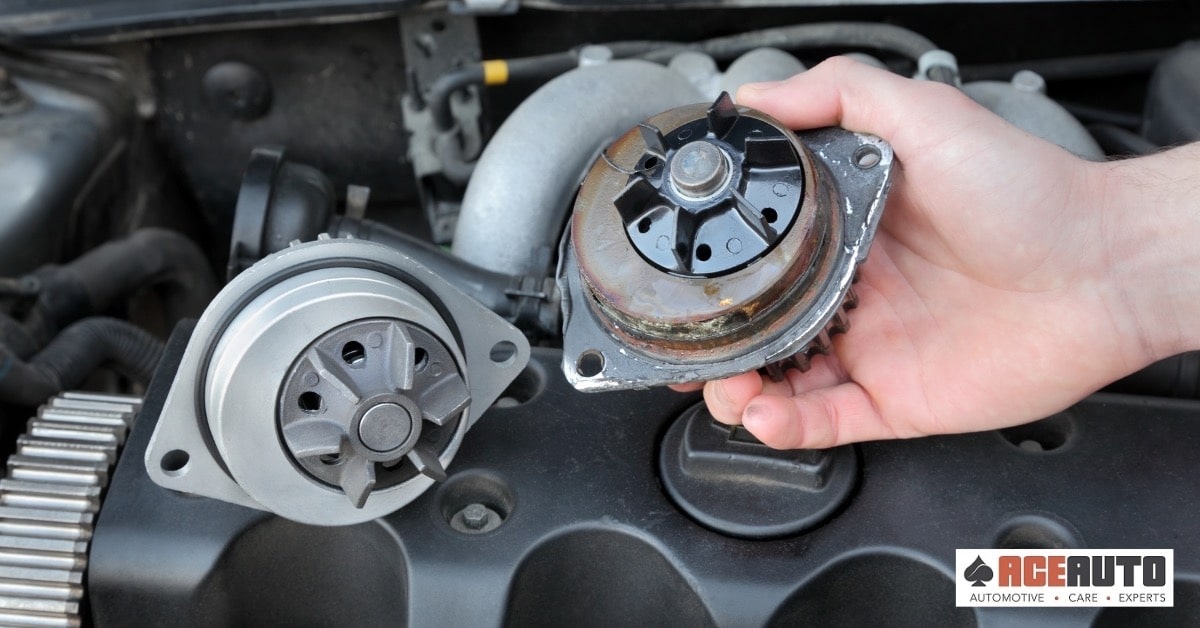
Every vehicle must have a properly functioning water pump in order for the engine to operate. The water pump drives coolant through the radiator and sends it circulating through the engine. When it malfunctions, an immediate water pump car repair becomes necessary to get your vehicle back in drivable condition.
The water pump is responsible for maintaining engine and radiator temperatures within the acceptable range. To keep your car in reliable and safe operating condition, you need to take care of any maintenance matters your water pump requires as need arises.
Troubleshooting Your Vehicle’s Water Pump Problem
There are numerous approaches to identifying water pump problems. For example, you may want to listen for unusual sounds coming from the pump, examine the belt and pulley, and check the thermostat. If the water temperature warning light is on, it may indicate that the coolant circulation in your car is insufficient, which may mean you need a water pump replacement. Or, one of a number of other checks may get you closer to discovering a problem with the pump.
Here are some of the most common problems that cause issues with water pumps, to help you in troubleshooting diagnosis of your water pump issue, and in deciding whether you may need automobile water pump repair:
Look for signs of coolant leaking. Check under the front area of your vehicle. Look for any puddling of red, orange, or green fluid. Leaking coolant is often due to issues involving the water pump.
Engine Overheating
The water pump’s purpose is to circulate coolant in the vehicle’s engine block and heads. When a water pump breaks down, it can no longer circulate engine coolant as it’s designed to do. When the coolant is not circulating as necessary to keep the engine cool, the temperature in the engine rises to an extreme degree, and the engine becomes overheated. An overheated engine is an urgent problem, requiring immediate attention to prevent potentially serious engine damage, including burned-up pistons, and split cylinder heads.
Slow Leaks of Coolant
Slow leaks can cause a wet area around the water pump. Check for engine coolant leakage in the area around the pump. Look for rust in the area too. Rust is not uncommon around the water pump when fluid is leaking. Gradual leaks usually don’t cause engine breakdowns very quickly, but they do cause coolant levels to drop. This reduces the amount of lubricant that protects the water pump’s working parts, which are in constant motion while the engine is running, and it promotes wear on the pump.
Steam from Engine
When your water pump is working properly, your engine will maintain a steady temperature range. If you notice steam coming up from your car hood, this indicates that your engine is extremely overheated due to insufficient coolant circulation and needs emergency attention. Turn off your engine immediately when you see steam coming from the engine. Do not ignore the problem, and don’t try to continue driving the car any farther toward your destination, even if it’s just a short distance. Allowing the vehicle to keep running can cause the need for engine rebuilding or replacement. Driving with an engine that is extremely overheated is also very dangerous.
Loose Water Pump Belt
A number of things can cause a belt to become loose. If your engine is making a loud squeaking noise, this may indicate a loose belt on the pulley that drives the water pump. Check to ensure that the water pump belt fits snugly in its proper position. Have a loose water pump belt adjusted or replaced promptly. Or, if the noise becomes more intense while you’re driving the vehicle, then the water pump may need to be replaced.
Circulation Problem
The vehicle’s water pump is responsible for coolant moving in your engine and radiator. Water pumps and fan belts often function in conjunction with one another, which involves impellers that circulate water through the engine. The main purpose of this system is to control engine temperature and prevent the buildup of excessive heat. Too much heat in the engine can lead to serious issues, including damage to pistons, or a crack in the block and/or heads, throwing a rod because the oil fails, and other extreme consequences to your engine parts.
Ace Auto Repair, West Jordan Utah
We specialize in repairs of all makes and models of cars, trucks, vans, and SUVs. Our mechanics are ASE Certified, which means they go through continuous training to stay current with high-tech systems in the latest model vehicles of all types. We offer affordable auto repair services and we provide repair estimates in writing.
Ace is a family-owned and operated business. We take pride in our fast, reliable, friendly, and honest service to our customers throughout the greater Salt Lake area. All our work is guaranteed!
For answers to your questions or to schedule an appointment for a diagnosis and/or repair, call Ace Auto Repair, West Jordan UT at (801) 803-6016, or use our online contact form to request an appointment.
You probably know that you should change the oil in your car every 3,000 miles, but do you know how often you should check the power steering fluid or the chassis lubrication? If you are unsure, review your car's owner manual to find the factory maintenance schedule recommended for your specific vehicle by the manufacturer. So, what is factory scheduled maintenance and why is it important for your vehicle?
Your vehicle's factory scheduled maintenance is a reminder to have your vehicle serviced every 3 months or 3,000 miles for preventative maintenance throughout the year. These manufacturers recommendations will keep your car running smoothly, help prevent costly repairs and ensure your manufacturer’s warranty remains valid.
Whether you take your car to the dealership or your local mechanic for scheduled maintenance, it is important to stick with the factory recommendations to make sure that coverage is valid throughout the duration of your factory warranty. Services like rotating tires, flushing the brakes and changing fluids, filters and spark plugs are all easy to keep up with compared to the potential repairs you may face if without regular maintenance.
If you have questions about your car's recommended factory maintenance, the helpful, certified mechanics at Ace Auto in West Jordan, Utah can let you know what is due (or overdue) for maintenance and perform the services to prevent costly problems to keep you on the road in a safe vehicle.
Factory Scheduled Maintenance in Your Vehicles Owner's Manual
You will find two different maintenance schedules in your owner’s manual, one labeled 'regular' and the other 'severe'. While you may not put a lot of miles on your car driving to and from work or getting the kids to school, soccer practice or piano lessons - you will want to consider the following strenuous conditions that can bump your service schedule up to 'severe':
Extreme Weather
Frequent, Short Commutes
Stop and Go Traffic
Idling
Heavy Loads
Rough Roads
Mountainous Roads
Salty or Dusty Conditions
If have an older vehicle that did not come with a manual, the Car Care Council, a non-profit organization for vehicle owners, offers a free customizable vehicle maintenance schedule to help you keep track of the dates and mileage for services performed.
Basic Car Maintenance Schedule by Month/Mileage
Every 3 Months/3,000 Miles
Every 6 Months/6,000 Miles
Automatic Transmission Fluid
Automatic Transmission Fluid
Battery and Cables
Battery and Cables
Belts
Belts
Engine Oil and Filter
Chassis Lubrication
Exhaust
Engine Air Filter
Fuel Filter
Engine Oil and Filter
Hoses
Exhaust
Lights
Fuel Filter
Power Steering Fluid
Hoses
Tire Condition (inflation & tread)
Power Steering Fluid
Windshield Washer Fluid
Tire Condition (inflation & tread)
Windshield Washer Fluid
Windshield Wiper Blades
Every 9 Months/9,000 Miles
Every 6 Months/6,000 Miles
Automatic Transmission Fluid
Automatic Transmission Fluid
Battery and Cables
Battery and Cables
Belts
Belts
Engine Air Filter
Brakes
Engine Oil and Filter
Cabin Air Filter
Exhaust
Engine Air Filter
Fuel Filter
Engine Oil and Filter
Hoses
Exhaust
Lights
Fuel Filter
Power Steering Fluid
Hoses
Tire Condition (inflation & tread)
Lights
Windshield Washer Fluid
Power Steering Fluid
Tire Condition (inflation & tread)
Windshield Washer Fluid
It is important to keep records of your vehicle's maintenance in case you need to use your manufacturer’s warranty. By logging all completed services, service dates and mileage at the time of service, you can help your mechanic understand what needs to be done to keep your car safe.
Professional, Friendly Service at Ace Auto to Keep Your Factory Scheduled Maintenance Up to Date in West Jordan Utah
For your vehicle's regularly scheduled factory recommended maintenance, call Ace Auto at 801-447-1693. Our friendly, experienced technicians will make sure your car is safe and in good repair to prevent time-consuming, costly problems in the future.
Are you burning through tanks of gas faster than you used to? Finding it harder to speed up to get around the nice old lady going 35mph on the highway? Having issues with your engine sputtering when you slow down? When was the last time you had your fuel injectors looked at? Keeping your fuel injection system well-maintained is one of the keys to better fuel performance for your car and a longer life for your engine.
Why Do Fuel Injectors Matter?
Your car’s fuel injection system consists of two primary parts: the fuel injectors and the fuel pump. The fuel pump sends pressurized fuel from the gas tank to the car’s engine bay. The injectors then distribute the fuel to different cylinders within the engine as a fine spray. Your spark plugs ignite the spray from the injectors, powering your car.
Computers control modern fuel injection systems, replacing the manual carburetors found in most cars built before 1990. Carburetors required time to warm-up before the car was ready to drive. Modern systems improve upon this performance by allowing cars to start up right away without needing this warm-up period, even in cold weather.
Fuel injection systems also improve the fuel efficiency of your car. A well-maintained system limits the amount of gas needed to power the car, giving you better mileage for every tank of gas. They also make less noise than old carburetor-powered engines and lead to less engine maintenance as your car parts last longer in this type of system.
Fuel Injection Maintenance
There are two primary ways to clean and maintain fuel injection systems:
On-Car Cleaning
These are a less-intensive way of cleaning injection systems. Nothing is taken apart or removed; instead, cleaners are introduced to remove contaminants from the system.
Method 1: Additives get poured directly into the fuel tank. They flow through the fuel system, eventually reaching the injectors and working to remove impurities.
Method 2: A pressurized canister of injector cleaner gets attached to the car’s fuel rail. The engine runs off of the cleaner instead of the fuel, giving the injectors a more thorough cleaning.
Off-Car Cleaning
The injectors get removed from your car entirely and cleaned with special ultrasonic tools. They’re then tested to ensure that the flow rate and spray pattern are within acceptable limits. Technicians also check for possible leaks before putting the injectors back into your car.
Fuel Injector Wear And Tear
You suck in dirt and other contaminants every time you drive your car. Over time, those contaminants get into your engine. When too much of it gets pulled into your injector and fuel pump, your car begins experiencing problems including:
A lack of acceleration when you step on your gas pedal
You start burning through gas faster every time you fill up
There’s a noticeable unevenness when you let your engine idle
Continued failure to maintain your car’s fuel injection system often leads to major damage to your engine, costing you a lot of money in repairs.
Think you might have an issue with your car’s fuel injection system?Contact Ace Auto in West Jordan, Utah today and schedule a review of your injection system. We’ll make sure your engine runs as efficiently as possible. Give our master mechanics a call today at 801-447-1693 for a free quote on your next service!
With summer on its way, it's time to start thinking about readying your car for the heat and all its glorious travel opportunities. With a little preparation, you can be ready for a spur of the moment weekend getaway, and have the confidence that your car will get you there and back safely.
Keep Tires in Great Shape for Hot Pavement Grip
Winter weather can be hard on tires. This is a good time of the year to do a quick check on your tires. This should include inspecting the tread and verifying proper inflation. Poorly inflated tires impact grip which makes driving feel more erratic, can reduce your overall miles per gallon, and can even lead to a tire blowout. Always check tire pressure with a calibrated tire pressure gauge.
If you live in an area that permits snow tires, now is a good time to change them out for your standard warm weather tires. Also, check up on your spare. Make sure one is present, the correct spare for your ride, and that you have the tools to put it in should a tire blow. Nothing is quite as awful as discovering a missing jack at 3 am with a blown tire in the middle of nowhere.
Lubrication Keeps Pistons Pumping
Oil is another area that sometimes gets overlooked. Check the oil and adjust to suit the needs of your car. Your owner's manual for your car will list recommendations for your climate. Warm oil is thin oil, and oil that is not thick enough won't provide the lubrication necessary to keep your engine in good working order. If a dealership or garage does your oil change, ask after the viscosity of oil they are using to double check it’s the right version for your needs.
Keep Your Engine Cool in the Hot Sun
Overheating is a primary cause for summertime breakdowns. One great method to reduce the risk of this is to keep on top of your coolant maintenance. Your radiator should be flushed completely and refilled every other year and you should check the level, general condition, and concentration of the coolant once in a while between replacements. If you do the flushing yourself, dispose of the old coolant properly; it has a sweet taste that dogs love and it is highly toxic.
Transmission Fluid Keeps You Shifting Smoothly
You want to keep an eye on your transmission fluid levels as well. Too much or too little, and you will run into problems that can, over time, lead to costly repairs. Further, make sure you read your manual to determine the correct mix of transmission fluid for your car. The SAE number found there will determine the right ATF mix.
Signs of too much transmission fluid:
Rough shifting. It will feel harder to jump from gear to gear.
Slippage. The engine will rev but your car won't respond.
Erratic behavior while shifting.
Signs of too little transmission fluid:
Failure to engage. The car will act like it's permanently in neutral.
Slow shifting. A sluggish response between gears.
Lurching and surging. Picking up speed rapidly then dropping back down while switching gears.
Enjoy a Frosty Interior on a Blistering Day
On a swelteringly hot day, you want your A/C in good working order. If it's not blowing a nice frigid blast through your car, you likely are in need of additional refrigerant. Ace Auto Repair can help charge your A/C if it's not keeping you nice and cool.
Summertime Tune-up West Jordan, Utah
As they say, an ounce of prevention is worth a pound of cure. Don't get stranded this summer on the side of the road with a smoking car. Bring your car into Ace Auto Repair in West Jordan, Utah for a summertime inspection, and we will check every element of auto maintenance listed above. Avoid summertime sadness and give your ride the basic service it requires to keep you on the road.
We have trusted Ace for years. They are honest, do excellent work, never pressure us but recommend service to keep our car running well. Zach and Jake give personal customer service that you don’t find in a huge shop. We highly recommend them.
At first I got a diagnosis for repairs, had AC leak, bad shocks and tires needed to be replaced plus oil change.
Zach (hope I spell the name correctly) took the car in, at first I was afraid of what other repairs would be required.
The car did not do so well on the AC and had to go back to the shop. Zach saw my frustration as the car belongs to my daughter and of course we were not in a good position to spend more money. Ace worked with us up to the end and we’re very understanding about everything and our frustration and got my daughter’s car back on the road and helped us all the way. Very Glad we took the vehicle to you. I only met Zach but I am sure more people are to thank here. Thanks for everything again
These guys are awesome! They did my transmission fluid the RIGHT way and for a fraction of the price that the steal-ership wanted to do just a flush. The guys are very informative, honest, upfront and super knowledgeable as well. All things that are hard to find with a mechanic shop, unfortunately. They easily earned a lifelong customer. 👍
Can't recommend these guys enough. I've been having them work on two different cars I've owned over the past couple years, and they have always been kind, patient, fair, and helpful. I've even had a dealership give me a free rundown of a car I bought there, then I called Ace to get their second opinion, and they were kind enough to translate all the mechanic gibberish to normal English for me as they gave me their second opinions on the initial assessment. I'm moving out of state soon, but these guys will be changing my oil and doing inspections and repairs anytime I'm back visiting Utah.
Fast, Affordable Oil Changes in West Jordan—No Appointment Needed
Semi-Synthetic and Full Synthetic Oil Change Service by Ace Auto Repair serving the entire Salt Lake Valley. Discount Oil Change available when you visit Ace Auto for the best oil change in West Jordan, UT.

















 Ace Auto Repair
Recent Comments