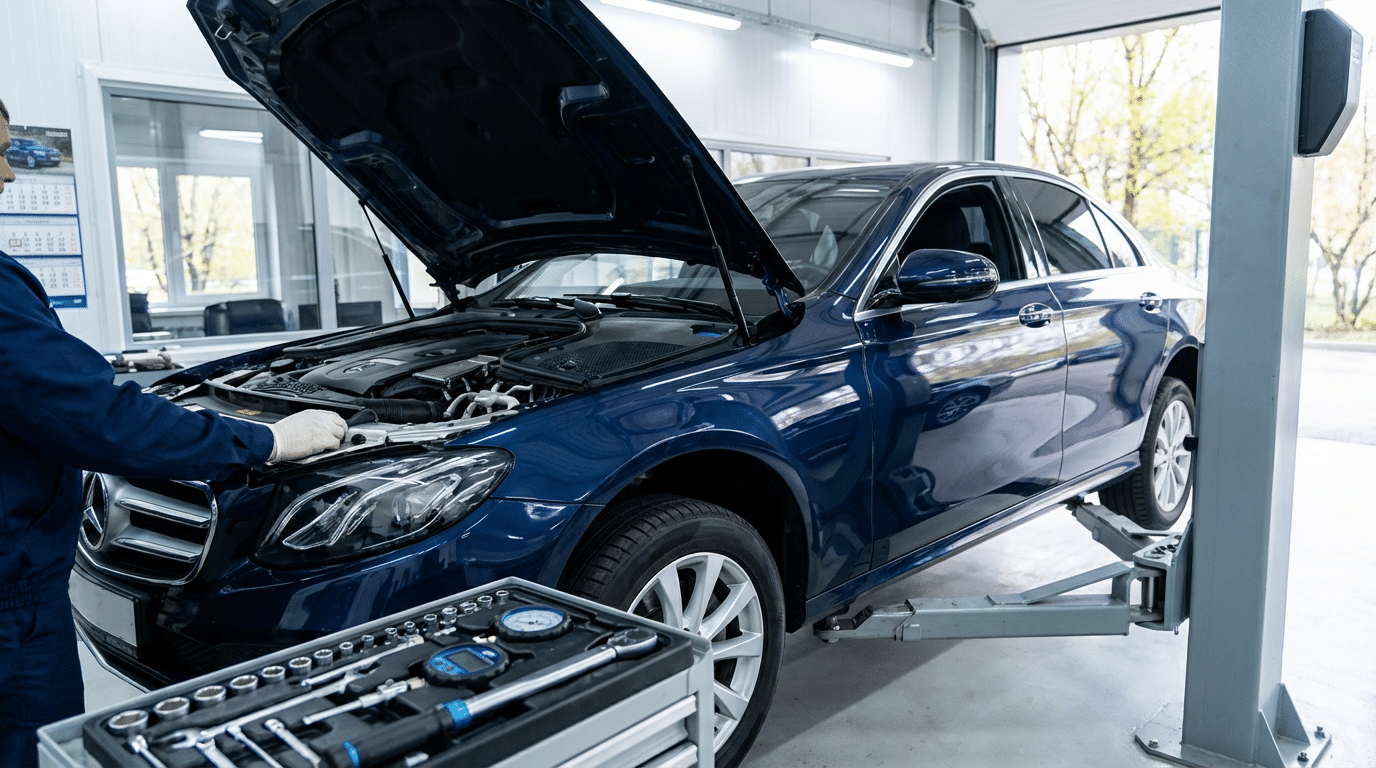
Why Seasonal Car Maintenance is Essential for Your Vehicle
Failing to adapt your car to Utah’s extreme weather invites expensive repairs and risks your safety. Seasonal maintenance is a proactive plan to address the specific stress each season puts on your vehicle, from summer heat on the Bangerter Highway to winter salt corrosion in Salt Lake Valley. It is the practice of inspecting, servicing, and preparing your car’s key systems before a new season begins, ensuring reliability and preventing predictable component failure.
Understanding the Impact of Changing Weather on Your Car
Your vehicle’s components react differently to a 100°F day in July versus a 15°F morning in January. Rubber hoses and seals become brittle in the cold and can degrade under intense UV exposure in the summer. Fluids like oil and coolant must work harder to maintain optimal operating temperatures. Addressing these seasonal impacts directly is the most effective way to extend your vehicle's life and ensure it starts every time you turn the key.
Spring Into Action: Your Essential Spring Car Maintenance Checklist
Spring maintenance is all about recovering from winter's effects and preparing for warmer, wetter weather. The salt, grime, and potholes from months of winter driving in the Salt Lake Valley take a serious toll on your car’s undercarriage, suspension, and alignment. A thorough inspection now prevents minor issues from becoming major repairs later.

Post-Winter Recovery: Addressing Salt, Potholes, and Debris
Winter road treatments are highly corrosive to your car's frame, brake lines, and exhaust system. Start spring with a comprehensive undercarriage wash to remove damaging salt and de-icing chemicals. Potholes hidden under snow and ice can easily knock your vehicle out of alignment, causing uneven tire wear and poor handling. Our ASE-certified master mechanics recommend a professional alignment check to restore vehicle stability and protect your tires.
- Undercarriage Wash: Power wash the underbody to remove corrosive salt and grime.
- Tire Inspection & Rotation: Check for winter damage, uneven wear, and proper inflation. Rotating them ensures they wear evenly.
- Suspension & Alignment Check: Hitting just one major pothole can compromise your suspension and alignment. If you notice your car pulling to one side, it may need a reliable wheel balancing service to correct the issue.
Key Checks for Spring Weather
As temperatures rise, your focus shifts to visibility and fluids. Worn winter wiper blades often streak or tear, compromising your view during spring rainstorms. It’s also the perfect time to check fluid levels that may have been neglected during colder months and ensure your A/C is ready for the first hot day.
- Wiper Blades & Fluid: Replace blades that leave streaks and top off your washer fluid.
- Air Conditioning Test: Run your A/C for a few minutes to ensure it blows cold. A weak A/C now is a sign of a potential refrigerant leak or compressor issue, which is better fixed before summer’s peak heat.
- Brake System Inspection: Salt and moisture can accelerate rust on rotors and calipers. A thorough brake inspection ensures your stopping power is at 100%.
Don't get caught with an expired registration. Spring is a popular time for renewals. We are an authorized facility for emissions tests and safety inspections, providing 'On The Spot' registration renewal for maximum convenience.
Hot Weather Readiness: Summer Car Maintenance Tips
An overheated engine on the side of I-15 is a common but preventable summer sight. Summer maintenance focuses on keeping your vehicle cool under the stress of high ambient temperatures, long road trips, and stop-and-go city traffic. Your cooling system, battery, and tires are the three most critical areas to inspect.
Keeping Your Cooling System in Top Shape
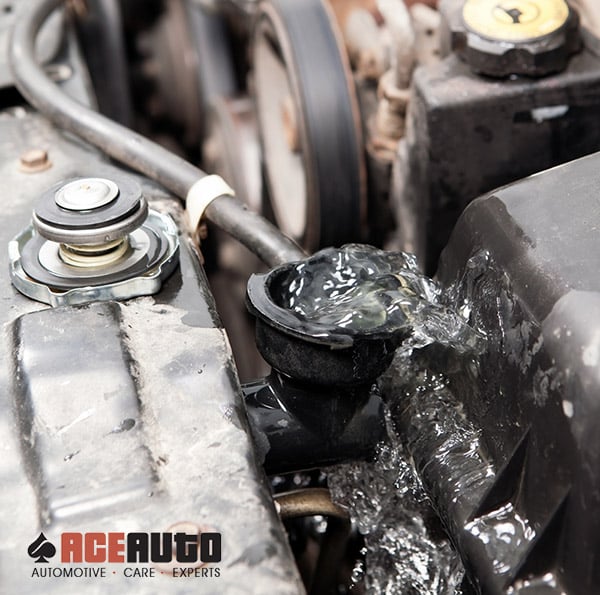
Your car's cooling system works overtime in the heat, especially during steep climbs like Parley's Canyon. The radiator, coolant, hoses, and water pump must all be in excellent condition to prevent overheating, which can cause catastrophic engine damage, such as a warped head gasket. Coolant degrades over time, losing its ability to transfer heat effectively.
Our ASE Certified Master Mechanics check for brittle hoses, leaks, and coolant condition. If the fluid is dirty or testing shows it has lost its protective properties, a top radiator flush service is one of the best preventive investments you can make. This service removes sediment and rust flakes, refilling the system with fresh fluid to ensure maximum cooling efficiency.
Preparing for Road Trips and Heat Stress
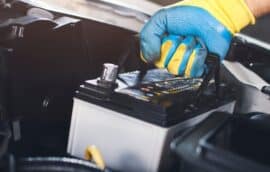
Summer heat is the number one killer of car batteries. High temperatures accelerate the chemical reactions inside the battery, shortening its lifespan. If your battery is over three years old, a professional load test can determine if it has the strength to get you through the summer.
- Battery Test: We can test your battery's health for free. This simple check provides peace of mind before a long trip.
- Tire Pressure Check: For every 10°F increase in temperature, tire pressure increases by about 1 PSI. Over-inflated tires have less contact with the road, reducing traction. Check pressure when the tires are cold.
- Check Belts and Hoses: Visually inspect all rubber belts and hoses for cracks, brittleness, or soft spots. A failed belt can disable your car instantly.
Ready your car for summer travel by having an expert inspect these systems. Schedule a pre-trip inspection for guaranteed peace of mind on the road.
Preparing for Cooler Weather: Fall Car Maintenance Checklist
Fall maintenance is your last, best chance to prepare for winter's harsh conditions. As days get shorter and temperatures drop, your priorities shift to visibility, traction, and ensuring your car will start on the first cold morning. Addressing these systems now prevents you from being caught unprepared by the first snowfall.
Transitioning from Warm to Cold Conditions
The transition from a warm to a cold engine puts significant stress on its internal components. Your vehicle’s battery loses significant power as temperatures drop, and fluids like oil and transmission fluid thicken, making the engine harder to turn over. This is when a weak battery or aging spark plugs will reveal themselves.
Understanding how the cold affects your car is the first step in prevention. Our experience serving the Salt Lake Valley shows that vehicles serviced in the fall have far fewer no-start issues in December and January. We check battery cranking amps and inspect ignition system components to ensure a reliable start all winter.
Focus on Visibility and Cold Starts
Your ability to see and be seen is critical as daylight hours dwindle. This is the time to verify all exterior lights are working, your defroster is effective, and your wiper blades are ready for sleet and snow. A failing heater core or blower motor is an issue you want to discover in October, not on a freezing morning commute.
- Check All Lights: Walk around your vehicle and check headlights, taillights, brake lights, and turn signals.
- Test Heater and Defroster: Ensure they are working effectively. A foggy windshield that won’t clear is a major safety hazard.
- Inspect Tires for Tread Depth: If your tires are nearing the end of their life, replace them before slick conditions arrive. Use a penny; if you can see all of Lincoln's head, your tread is too low for safe winter driving.
Don't wait for the first frost. Ask us about a fall vehicle check-up to ensure your visibility and starting systems are ready for winter.
Conquering the Cold: Winter Car Maintenance Essentials
Winter in Utah demands more from your vehicle than any other season. Freezing temperatures, corrosive road salt, and icy roads create a trio of threats that can disable a car without warning. Winter maintenance focuses on three core areas: reliable starting power, maximum traction, and your personal safety.
Protecting Against Snow, Ice, and Freezing Temperatures
Freezing temperatures are your battery’s worst enemy. A battery can lose over a third of its power at 32°F and more than half its power at 0°F. If your battery is more than three years old, it's at high risk of failure. We perform a professional load test to see if it has enough cold-cranking amps for a West Jordan winter.
Additionally, ensure your coolant (antifreeze) is rated for Utah’s low temperatures. Improperly mixed or old coolant can freeze, expand, and crack your engine block, leading to a catastrophic and expensive auto engine rebuild. We can test your coolant’s freeze protection level in minutes.

Battery, Tires, and Emergency Gear for Winter Driving
Traction is a matter of survival on icy roads. All-season tires can harden and lose grip in freezing temperatures. Winter tires are made from a softer rubber compound that stays flexible in the cold, providing significantly better grip on ice and snow. We recommend a dedicated set of winter tires for anyone who commutes regularly in the Salt Lake Valley.
- Battery Health: This is the #1 cause of winter no-starts. Get it tested before the first hard freeze.
- Winter Tires: They provide the safest stopping and handling performance on snow and ice. The investment is small compared to an insurance deductible.
- Emergency Kit: Pack a kit with a blanket, flashlight, jumper cables, ice scraper, and a small shovel. If your car sits for more than two weeks without being driven in winter, the battery can drain completely. A portable jump starter is a wise addition to your kit.
Bring your car in for a winter readiness inspection. Our technicians will ensure your vehicle is prepared to handle whatever the season throws at it.
Year-Round Maintenance Basics: Beyond Seasonal Checks
While seasonal prep is critical, a foundation of consistent, year-round maintenance ensures your car remains reliable and retains its value. These checks are the baseline for vehicle health and should be performed regularly, regardless of the season. Neglecting them undermines any seasonal efforts you make.
Fluid Checks and Tire Care: The Constants
Engine oil, transmission fluid, brake fluid, and coolant are the lifeblood of your vehicle. Regularly checking these levels and conditions prevents the vast majority of mechanical issues. Similarly, maintaining correct tire pressure is the easiest way to improve fuel economy, extend tire life, and ensure safe handling.
Our Oil Change Loyalty Program makes this essential service more affordable. Purchase a $25 sticker for your vehicle and get up to $15 off every future oil change for as long as the sticker is on your car. It's our way of rewarding proactive owners.
Extreme temperatures can also sometimes reveal underlying issues, especially in complex systems. Pay attention to any odd behavior from your transmission in summer heat or winter cold, as these can be early signs you need transmission repair.
Understanding Your Car's Maintenance Schedule
Your vehicle's manufacturer provides a detailed maintenance schedule, often organized by mileage intervals like 30,000, 60,000, and 90,000 miles. This is sometimes called the "30-60-90 rule." This schedule outlines when to replace key components like spark plugs, timing belts, and fluids. Adhering to this factory-prescribed plan is the single best way to ensure longevity and prevent unexpected, costly failures. Our ASE Certified technicians are experts in the factory-scheduled maintenance for all makes and models.
DIY vs. Professional Service: When to Call the Experts
Performing your own maintenance can be rewarding, but it's crucial to know your limits. While tasks like changing wiper blades or topping off washer fluid are simple DIY jobs, most seasonal checks require professional expertise and equipment. Safety and reliability should always be the priority.
Systems like brakes, suspension, alignment, and engine diagnostics require precise tools and deep knowledge. A mistake during a DIY brake job can have fatal consequences. Our ASE Certified Master Mechanics have years of training and experience, and our shop is equipped with diagnostic tools that can identify issues the home mechanic would miss. All our work is 100% guaranteed, providing a level of peace of mind that DIY work cannot match.
Common Questions About Seasonal Car Maintenance
What is the $3000 rule for cars?
The $3,000 rule is a financial guideline, not a mechanical one, used to decide whether to repair or replace an older car. If the cost of a needed repair is more than the car is worth, or more than a set amount like $3,000, some owners choose to put that money toward a new vehicle instead. However, if a $3,000 repair on a vehicle worth $5,000 gives you several more years of reliable service, it can be a much better financial decision than taking on a new car payment.
How does Salt Lake's dry air affect my car's belts and hoses?
Utah's arid climate, combined with intense sun exposure, accelerates the breakdown of rubber components. The dry air leaches plasticizers out of belts and hoses, making them brittle and prone to cracking. We recommend a visual inspection of all belts and hoses at every oil change to catch potential failures early.
Should I get my brakes checked more often if I drive up Big and Little Cottonwood Canyons?
Absolutely. The steep descents from the canyons put immense heat and stress on your brake system. This can lead to accelerated wear of brake pads and rotors, and can cause brake fluid to degrade faster. If you frequently drive these canyon roads, we recommend a professional brake inspection every six months or 6,000 miles to ensure your safety.
Is a winter tire swap really necessary for just driving around West Jordan?
Yes, we strongly recommend it. Even on plowed city streets in West Jordan or Taylorsville, you will encounter black ice, packed snow at intersections, and unplowed side streets. Winter tires provide significantly more grip and shorter stopping distances in temperatures below 45°F, which is a critical safety advantage during Utah's long winters.
What does a seasonal inspection at Ace Auto Repair typically include?
Our comprehensive seasonal inspection is a multi-point check of your vehicle's most critical systems. It includes testing the battery, inspecting brakes, checking all fluid levels and conditions, examining belts and hoses, testing the heating/AC system, inspecting tires for wear and pressure, and checking all exterior lights. We provide a clear report of our findings so you can make informed decisions.
Take Control of Your Vehicle's Health This Season
Seasonal maintenance isn't a cost; it's an investment in safety, reliability, and peace of mind. By proactively addressing the specific challenges of each Utah season, you prevent the stress and expense of an unexpected vehicle issue. You ensure your car is ready for a summer road trip or a winter commute.
As a family-owned business serving the Salt Lake Valley, our goal is to keep you and your family safe on the road. All our work is performed by ASE-certified master mechanics and is 100% guaranteed. Don't wait for a warning light to appear.
Take the first step toward a worry-free season of driving. Contact Ace Auto Repair today to schedule a comprehensive seasonal inspection.
Related Reads:



 Ace Auto Repair
Recent Comments