Engine Rebuild Services Cost Guide: Pricing & What to Expect

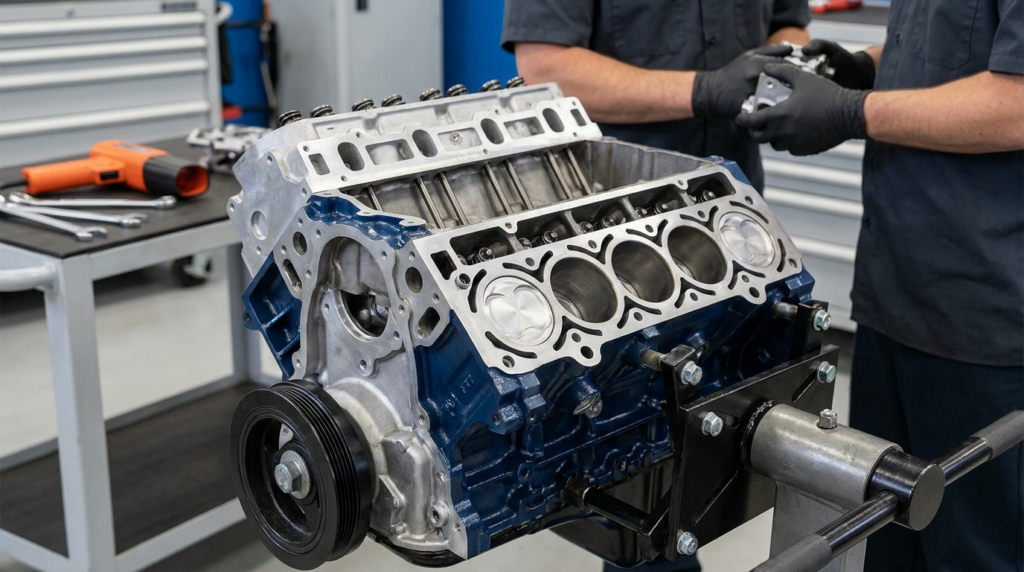
Two people wearing gloves work on a partially assembled car engine mounted on a stand in an automotive workshop, discussing engine rebuild cost and detailing their engine rebuild services.

Two people wearing gloves work on a partially assembled car engine mounted on a stand in an automotive workshop, discussing engine rebuild cost and detailing their engine rebuild services.

A major engine issue feels like the end for your vehicle. Facing unexpected repair costs can understandably create stress and uncertainty. Understanding what an engine rebuild entails and what it typically costs can help you make an informed decision for your vehicle's future.


Quick Answer

An engine rebuild typically costs between $2,500 and $4,500, varying significantly based on vehicle type, engine complexity, and part availability. This service restores your engine to factory specifications, often extending vehicle life for years, and proving a more cost-effective solution than full engine replacement in many cases.


Table of Contents


Understanding the Cost of Engine Rebuild Services
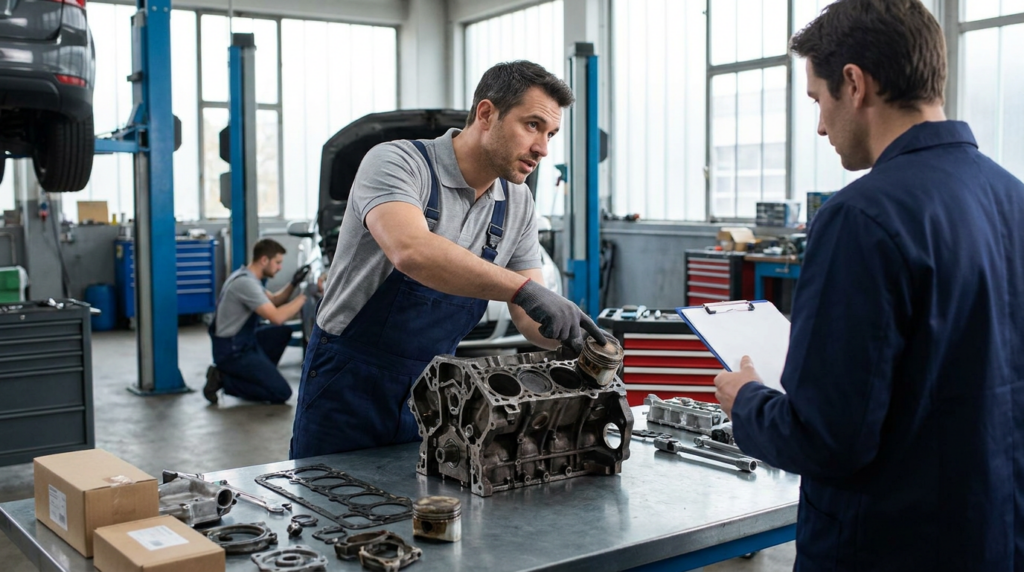
Two mechanics in a workshop discuss an engine block on a workbench, surrounded by engine parts and tools. One writes on a clipboard while the other gestures at the engine, considering options for an engine rebuild and discussing engine rebuild cost.

The price tag for an engine rebuild can seem daunting, but it's often a fraction of the cost of buying a new vehicle. Most engine rebuilds fall within the $2,500 to $4,500 range, a significant investment that extends your vehicle's life and saves you from a new-car payment. The exact cost hinges on several factors, from the specific engine type to the labor involved.

Average Engine Rebuild Costs by Vehicle Type and Engine Size

Engine rebuild costs fluctuate significantly based on your vehicle's make and model, as well as the engine's complexity. A standard 4-cylinder engine may cost less to rebuild than a complex V8 or a diesel engine because it has fewer parts and easier access. For instance, a small 4-cylinder car engine might range from $2,000 to $3,500, while a V6 could be $3,000 to $4,500. Large trucks or vehicles with specialized engines (like diesel) often have rebuild costs starting at $4,000 and rising due to intricate systems and specialized parts.

Factors That Influence Engine Rebuild Pricing

Several key factors determine the final cost of an engine rebuild. The biggest differentiator is the engine type itself: more cylinders, specialized performance engines, or diesel power plants inherently cost more to service. Labor rates also vary with regional economic factors and the shop's expertise, though our ASE-certified mechanics in West Jordan ensure top-tier service. The availability and cost of parts, whether OEM or aftermarket, play a critical role; some older or rarer vehicles may require hard-to-find components, increasing expenses. Our commitment is to provide transparent, honest estimates, so you know what to expect upfront.


What is an Engine Rebuild and When is it Needed?

An engine rebuild is the process of disassembling your engine, inspecting all components, cleaning them, replacing worn or damaged parts, and then reassembling it to factory specifications. This differs significantly from a simple repair, targeting fundamental issues to restore your engine to near-new condition. It's often the best option when the core engine structure is sound but internal components have failed.

Pro Tip: Many vehicle owners confuse an engine rebuild with an engine swap. A rebuild restores your existing engine, while a swap replaces it entirely with a new or used unit. We help you understand the best option for your vehicle and budget.

Signs Your Engine May Need a Rebuild

Your vehicle often gives clear warnings when its engine is failing. Common indicators include excessive smoke from the exhaust (blue, white, or black), a significant drop in oil pressure, persistent knocking or tapping noises from the engine block, decreased power and fuel efficiency, or overheating that can't be resolved by cooling system repairs. If your "check engine" light is on and the diagnosis points to internal engine damage, a rebuild might be the answer. Timely diagnosis and action can prevent a complete engine failure.

The Engine Rebuild Process: What to Expect

An engine rebuild is a careful, multi-step process that demands expert hands. First, our technicians diagnose the core issue and confirm that a rebuild is the best solution. The engine is then removed from the vehicle and completely disassembled. Every component, crankshaft, camshaft, pistons, cylinder heads, and valves, is thoroughly cleaned, inspected for wear, and measured. Worn parts are replaced with new, high-quality components. Finally, the engine is carefully reassembled, adjusted, and bench-tested before being reinstalled in your vehicle. This intricate process, typically taking several days, ensures your engine performs reliably for years to come.


Detailed Breakdown of Engine Rebuild Costs

The total cost of an engine rebuild isn't just one number; it's a sum of various essential elements. Understanding these individual costs helps you see the value in the service and why it can be a more intelligent investment than replacement. Most of the expense comes from specialized labor and the quality of replaced components.

Labor Costs for Engine Rebuild Services

Labor is a significant portion of any engine rebuild, reflecting the expertise and time involved. Disassembling, inspecting, repairing, and reassembling an engine is a highly skilled job that requires hours of focused work by certified professionals. Our ASE Certified mechanics have the precise knowledge and experience to perform these complex tasks correctly, ensuring your engine runs perfectly. Expect labor to account for 50-70% of the total rebuild cost, typically ranging from $1,500 to $3,000, depending on the engine's complexity and the required hours. This careful process is what allows us to confidently offer complete guarantees on our work.

Parts and Materials: Essential Components for a Rebuild

The quality of parts used in a rebuild directly impacts the engine's longevity and performance. Essential components that are often replaced include pistons, piston rings, main and rod bearings, gaskets, seals, and timing components. Depending on the wear, other parts, such as cylinder heads, valves, or a crankshaft, might need machining or replacement. We use high-quality OEM or trusted aftermarket parts, such as ACDelco and Federal-Mogul components, to ensure durability. These parts typically add $800 to $2,000 to the total cost.

Additional Services & Unexpected Costs

Sometimes, an engine rebuild might uncover additional issues or require supplementary services. For example, if the engine suffered severe overheating, additional machine work, such as cylinder head re-surfacing, might be necessary. Sensor replacements, hose replacements, or even a new radiator may be advisable to protect your newly rebuilt engine. While we provide free repair quotes upfront, an in-depth inspection can sometimes reveal these unforeseen issues. We communicate any additional costs transparently and seek your approval before proceeding. Ask us about our "Free Repair Quote" to get started with an accurate estimate.


Engine Rebuild vs. Engine Replacement: Cost-Benefit Analysis

When your engine fails, you generally face two main options: rebuild or replace. Each path has distinct financial and performance implications. Choosing between them depends on your budget, your vehicle's overall condition, and your long-term goals. We help you weigh these options to make the best decision.

Is Rebuilding Cheaper Than Replacing Your Engine?

In most cases, an engine rebuild is notably more cost-effective than a full engine replacement. A new engine can cost anywhere from $4,000 to $8,000, not including labor, while a used or remanufactured engine ranges from $2,500 to $6,000. When you factor in labor for removal and installation, total replacement costs often exceed $5,000 to $10,000. Conversely, an engine rebuild, averaging $2,500-$4,500, utilizes your existing engine block, saving you material costs. This is why customers like Greg Willis consistently praise us for finding the real, much cheaper problem and fixing it, saving them a ton of money.

Long-Term Value and Performance of a Rebuilt Engine

A properly rebuilt engine can extend your vehicle's lifespan by many years, often adding 100,000 miles or more. Because the process brings the engine back to factory specifications with new internal components, it can perform as well as a new engine. This preserves your vehicle's original value and allows you to continue driving a car you know and trust. It's a strategic investment that offers excellent long-term value, especially for well-maintained vehicles. For a personalized assessment of your vehicle's specific needs, we offer free repair quotes.

A mechanic in coveralls works on a car engine in an auto repair shop, where engine rebuild services are underway, with tools and engine parts laid out on a nearby workbench.


How to Save Money on Your Engine Rebuild Services

An engine rebuild is a significant investment, but there are ways to ensure you get the best value for your money. Smart decisions start with who you trust for the job and how you maintain your vehicle. We focus on fair, upfront pricing and empowering our customers with knowledge.

Choosing the Right Mechanic and Shop

Selecting a reputable and trustworthy auto shop is essential. You need ASE Certified mechanics who specialize in engine repair and have a proven track record. Look for shops that provide transparent pricing, detailed estimates, and a clear explanation of the process. David W, a long-time customer since 2013, highlights our team as knowledgeable, helpful, and honest, providing upfront discussion on vehicle issues. Choosing a local, top-rated auto shop like Ace Auto Repair means you're trusting experts committed to honest, reliable auto repair. Get your free repair quote from our specialists today.

Preventative Maintenance to Extend Engine Life

The most effective way to save money on expensive engine repairs, including rebuilds, is through consistent preventative maintenance. Regular oil changes using quality Mobil 1 Oil, timely coolant flushes, and addressing minor issues before they escalate significantly extend your engine's life. Following your vehicle's maintenance schedule and opting for professional automotive tune-ups help avoid the wear and tear that can lead to major engine failure. Investing in routine care is always cheaper than a rebuild.


Frequently Asked Questions About Engine Rebuild Costs

How much should I expect to pay for an engine rebuild?
You should generally expect to pay between $2,500 and $4,500 for an engine rebuild. This range can vary based on factors such as your engine's make, model, complexity, and whether it's a standard gasoline engine or a specialized diesel engine.
How long should a full engine rebuild take?
A full engine rebuild typically takes 3 to 7 business days, depending on the engine's specifics and parts availability. The process is intricate, involving disassembly, cleaning, inspection, part replacement, reassembly, and testing.
What is included in a standard engine rebuild?
A standard engine rebuild includes disassembling the engine, cleaning all components, inspecting them for wear, replacing critical parts like pistons, piston rings, bearings, gaskets, and seals, and then reassembling and testing the engine to meet factory specifications.

Get a Personalized Quote for Your Engine Rebuild Services Today

Facing an engine issue is never ideal, but our team at Ace Auto Repair makes the next steps clear and stress-free. Our ASE Certified mechanics provide expert engine rebuild and repair services. We believe in honest solutions and transparent pricing, prioritizing your vehicle's longevity and your peace of mind. Don't let engine troubles leave you stranded or lead to unnecessary expenses. We offer free repair quotes to accurately assess your vehicle's needs and provide a tailored solution. Let us help you get back on the road with confidence.

The Bottom Line

An engine rebuild is a smart, cost-effective alternative to replacing the vehicle when your engine experiences a major failure. Expect costs between $2,500 and $4,500, with labor and parts as the primary drivers. Crucially, choosing a trusted ASE-certified shop like Ace Auto Repair ensures quality work and long-term value. Regular preventative maintenance remains your best defense against unexpected engine issues.

Ready for a Reliable Engine?

Your vehicle's engine is its heart, and when it needs significant attention, you need a team you can trust. Ace Auto Repair specializes in bringing engines back to life with the precision and care only ASE Certified mechanics can provide. We extend your vehicle's lifespan, save you money compared to replacement, and restore its performance to factory standards. Let us clearly explain your options, costs, and timeline. We're committed to honest, reliable auto repair for our Salt Lake Valley community. Get Your Free Engine Rebuild Quote Now!

Related Reads:

Why Your Car AC Is Blowing Warm Air: Common Causes & Quick Fixes

Person adjusting the touchscreen display on a car dashboard while driving on a highway, possibly checking for car AC fixes after noticing the car AC blowing warm air.

Person adjusting the touchscreen display on a car dashboard while driving on a highway, possibly checking for car AC fixes after noticing the car AC blowing warm air.

A car's air conditioning failing on a hot day is more than an inconvenience. It’s a fast track to a miserable commute, especially during a scorching Utah summer. If your AC is blowing warm air, the most common causes are low refrigerant, a failing compressor, or an electrical fault. Understanding the source of the problem is the first step to getting back to a cool, comfortable drive. This guide breaks down the common culprits behind a warm AC. We’ll cover what you can safely check yourself and explain when it’s time to let a certified professional take over. We will help you diagnose the issue and find the right solution.


Quick Answer

  • Low Refrigerant: The most frequent cause of warm AC is a leak in the system.
  • Faulty Compressor: The AC compressor is the heart of the system. If it fails, the refrigerant cannot circulate.
  • Electrical Issues: Blown fuses, bad relays, or damaged wiring can prevent the AC components from turning on.
  • Clogged Components: A blocked condenser or cabin air filter restricts airflow and heat exchange, reducing cooling performance.


Table of Contents


Understanding Your Car's AC System: A Quick Overview

Your car's air conditioning is a closed-loop system that uses pressure changes to cool the air. It works much like your home refrigerator, transferring heat from inside the cabin to the outside air. Though it seems like magic, it relies on a few key parts working together perfectly.

Key Components of Your Car's Air Conditioning

Think of your AC as a team. If one player is out, the whole team suffers. Here are the main components responsible for delivering cold air:

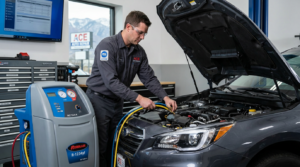
A mechanic uses an air conditioning service machine to check and refill the AC system of a car with its hood open, addressing causes of Car AC blowing warm air and providing quick fixes inside an auto repair shop.

  • Compressor: This is the engine-driven pump that pressurizes the refrigerant (like R-134a or the newer R-1234yf) and circulates it through the system.
  • Condenser: Located at the front of the car, usually near the radiator, it dissipates the heat absorbed from the cabin. It turns the high-pressure refrigerant gas back into a liquid.
  • Evaporator: Hidden inside the dashboard, this component absorbs heat and moisture from the cabin air as the liquid refrigerant expands back into a gas, cooling the air.
  • Refrigerant: This is the specialized chemical compound that actually does the cooling. Without the correct amount and type, the system cannot function.
  • Receiver/Drier or Accumulator: This part removes moisture from the refrigerant, preventing corrosion and system freeze-ups.


Common Reasons Why Your Car AC Is Blowing Warm Air

A warm AC almost always points to a specific failure within this system. Our ASE-certified technicians in West Jordan diagnose these issues daily. Here are the most common culprits we find.

Low Refrigerant (Freon) Levels

Low refrigerant is the number one reason an AC blows warm air. Your AC system is sealed, so if the level is low, it means there is a leak. Refrigerant doesn't "get used up" like gasoline. Think of it like the blood in your veins; you only lose it if there's a wound.

Refrigerant Leaks

Leaks are the root cause of low refrigerant. They can be tiny and difficult to spot, often occurring at hose connections, seals, or due to condenser corrosion. Over time, even a small leak will drain enough refrigerant to stop the system from cooling. We use specialized UV dye and electronic "sniffers" to pinpoint the exact source of a leak, ensuring a permanent fix.

Malfunctioning AC Compressor or Clutch

The compressor is the heart of your AC, so its failure is critical. It can fail internally due to age or a lack of lubrication (often caused by a refrigerant leak). You might also have a failed compressor clutch, which is the part that engages and disengages the compressor pulley from the engine belt. If the clutch won't engage, the compressor won't run.

Clogged Condenser or Evaporator

Your condenser sits at the front of your car and can get clogged with road debris, such as leaves, dirt, and bugs. A clogged condenser cannot release heat effectively, crippling the AC's performance. An internally clogged evaporator core can also restrict refrigerant flow, leading to warm air from the vents.

Electrical System Issues (Fuses, Relays, Wiring)

Modern AC systems rely on a network of sensors, fuses, and relays. A simple blown fuse can shut down the entire system. More complex issues, like a faulty pressure switch or damaged wiring, can send incorrect signals and prevent the compressor from turning on. Diagnosing these requires a systematic approach, much like the process used to pinpoint issues during transmission repair diagnostics.

Broken Blend Door Actuator

Sometimes, the AC system is making cold air, but it's not reaching your vents. The blend door is a flap inside your dashboard that directs airflow. A broken or stuck blend door actuator can block the cold air or mix it with hot air from the heater core, resulting in lukewarm temperatures. You might hear a clicking or ticking sound from the dashboard when this component fails.

Dirty or Clogged Cabin Air Filter

A severely clogged cabin air filter can reduce airflow so much that it feels like the AC isn't working. While it doesn't stop the system from producing cold air, it prevents that air from getting into the cabin effectively. This is one of the easiest issues to check and resolve yourself.

Cooling Fan Problems

The electric cooling fans (or engine-driven fan) pull air through the condenser to help dissipate heat. If a fan fails, the condenser can't do its job, especially when you're stopped in traffic. This often leads to an AC that works on the highway but blows warm when you're idle.


Quick Fixes and DIY Solutions for Warm AC

While most AC issues require professional tools and knowledge, there are a few things you can safely check at home before scheduling a service. These simple steps can sometimes solve the problem or at least help you provide better information to your mechanic.

Checking and Topping Off Refrigerant (With Caution)

This is where most DIY attempts go wrong. While "AC recharge" kits are sold at auto parts stores, we strongly advise against them. Using one is a gamble.

Pro Tip: Overcharging your AC system with a DIY can is just as bad as undercharging it. Too much pressure can damage the compressor and other components, leading to a far more expensive repair. Plus, these kits don't fix the underlying leak.

Modern vehicles (typically 2015 and newer) use a different refrigerant called R-1234yf, which is not compatible with older systems and requires specialized equipment. Ace Auto Repair is one of the few shops in the Salt Lake Valley fully equipped to service these newer, eco-friendly systems.

Inspecting and Replacing the Cabin Air Filter

This is a safe and simple DIY task. Your owner's manual will show you where the cabin air filter is located, usually behind the glove box. If it's black with dirt and debris, replacing it can significantly improve airflow and is an inexpensive fix. A clean filter also improves the air quality inside your car.

Basic Electrical Checks: Fuses and Relays

You can also check the fuse box for a blown AC fuse. Your owner's manual or the fuse box lid will have a diagram showing which fuse corresponds to the air conditioning system. Pull the fuse out and inspect it. If the metal strip inside is broken, replace it with a new fuse of the exact same amperage. This can sometimes be a quick, lucky fix.


When to Seek Professional Car AC Repair

If the simple checks don't restore your cold air, it's time for professional help. Trying to fix complex AC issues without the right training can cause more damage and cost you more in the long run. Our customers often tell us they appreciate how we explain what needs to be fixed and why, giving them confidence in the repair.

Diagnosing Complex Leaks or Component Failures

Professionals have the right tools for the job. We use fluorescent UV dye that circulates with the refrigerant to visually pinpoint even the smallest leaks with a blacklight. We also use electronic refrigerant sniffers that can detect leaks invisible to the naked eye. Accurately diagnosing a failing compressor or a blocked evaporator requires experience and diagnostic equipment such as Bosch Diagnostics systems.

The Importance of Certified AC Technicians

Working on AC systems isn't just a mechanical task; it's a legal one. Handling refrigerants requires specific EPA Section 609 certification to prevent environmental damage. Our ASE-certified technicians have this training, ensuring your vehicle is repaired correctly, safely, and legally.

As one customer, Rett Johnson, noted in a 5-star review, "Even though it was a higher price than other shops quoted, you get what you pay for." This highlights the value of expert service. A cheap fix that doesn't last is no bargain. When you bring your car to our shops in West Jordan or our other locations serving areas like Riverton, you're paying for a lasting solution.


Preventative Maintenance to Keep Your AC Cold

The best repair is the one you never have to make. A little preventative care can go a long way in keeping your air conditioning system running reliably for years. Don't wait for it to fail on the hottest day of the year.

A mechanic in uniform addresses common car AC causes, servicing a vehicle’s air conditioning system with a Robinair A/C refrigerant recovery and recharging machine inside a garage.

Regular AC System Checks

Engage your AC system periodically, even during the winter. Run it for about 10 minutes once a month. This helps circulate the refrigerant and oil, keeping seals lubricated and preventing them from drying out and cracking, which is a common source of leaks.

Seasonal AC Servicing

We recommend a professional AC performance check before summer hits. An expert can measure system pressures, check refrigerant levels, and inspect components for wear and tear. Finding a small issue early, like a worn belt or a minor leak, is much more affordable than replacing a failed compressor later. Ask about an AC check during your next oil change or service appointment.


FAQs About Car AC Blowing Warm Air

We hear these questions all the time at our shop. Here are some straightforward answers from our experts.

How do I fix my AC blowing warm air in my car?
First, check the simple things: ensure the AC button is on and the temperature is set to cold. Check for a clogged cabin air filter and look for obvious obstructions on the condenser at the front of the car. If these aren't the issue, the problem is likely low refrigerant due to a leak, a bad compressor, or an electrical fault, all of which require a professional diagnosis. The best first step is to get a free repair quote to understand the exact problem.
What is the 3-minute rule for AC?
The "3-minute rule" is a piece of automotive folklore suggesting you should wait three minutes after starting your car before turning on the AC. The theory is that this allows the engine to warm up and stabilize. While it won't harm anything, modern cars are strong enough to handle the AC turning on immediately. It is not a diagnostic tool or a required practice.
What causes my car's AC to blow warm air?
The most common cause is a refrigerant leak, resulting in low refrigerant levels. Other major causes include a failed AC compressor, a clogged condenser, electrical problems like a blown fuse, or issues with the blend door that directs airflow.
Is it safe to drive with warm AC?
Yes, it is generally safe to drive your car if the AC is only blowing warm air. The failed AC system will not affect your car's engine performance or safety systems. However, if the compressor has seized, it could cause the serpentine belt to break, which would be a major problem as this belt often runs the alternator and water pump. If you hear squealing or grinding noises when you turn on the AC, it's best to leave it off and have it inspected immediately.


The Bottom Line

A car AC blowing warm air is a solvable problem. While a few issues can be resolved with simple checks, most require the expertise and tools of a certified technician. Ignoring the problem or attempting a risky DIY fix often leads to more significant and expensive damage. Taking a systematic approach will get your cool air back faster and more reliably.


Don't Sweat It, Get Your AC Fixed!

A working air conditioner is essential for driving comfortably and safely in the Salt Lake Valley. Whether you're commuting through West Valley City or running errands in South Salt Lake, you deserve a cool ride. Don't put up with a faulty AC system any longer.

Our team of ASE-certified mechanics has the expertise to accurately diagnose and repair any AC issue, from simple leaks to complex electrical faults. We pride ourselves on honest, reliable auto repair that our customers trust. We'll find the root cause of the problem and explain your options clearly, just as customers like Cody Wright praised when he said our shop "exceeded my expectations... If you want high-quality work without the runaround, this is the place to go!"

Let us restore your comfort so you can drive with confidence. Contact Ace Auto Repair today for your free, no-obligation repair quote and get back to enjoying a cold, refreshing drive.

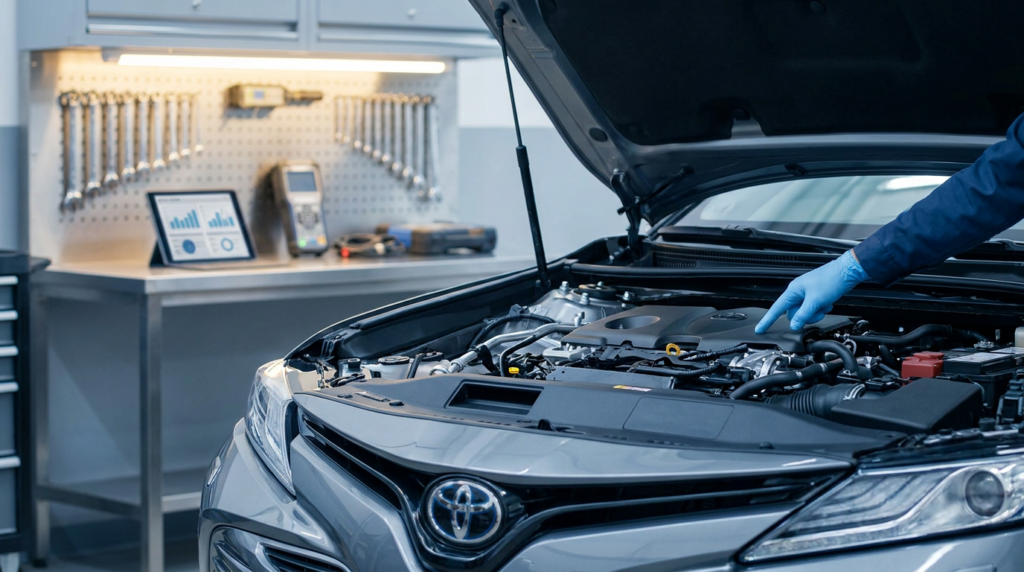
A person wearing gloves inspects the engine of a Toyota car in an auto repair shop, where tools and diagnostic equipment reflect a transparent approach to servicing often valued by family car owners.

A person wearing gloves inspects the engine of a Toyota car in an auto repair shop, where tools and diagnostic equipment reflect a transparent approach to servicing often valued by family car owners.

When your car lurches on the I-15 or hesitates during a merge, it is more than an annoyance. It is a safety concern for your family. A failing transmission threatens your peace of mind and your budget, especially if a misdiagnosis leads to unnecessary and expensive replacements.

At Ace Auto Repair, we eliminate the fear of being overcharged through precision diagnostics and transparent communication. We show you the work needed and explain your options in plain English, ensuring you get a reliable fix backed by a solid warranty. Here is our guide to transmission repair, designed for family drivers who need a partner they can trust.


Quick Answer

Choosing the right transmission repair shop hinges on verifiable expertise, a transparent process, and a commitment to your family's safety. Prioritize shops with ASE-Certified technicians who use advanced diagnostic tools to pinpoint the exact issue. A trustworthy partner will clearly explain repair vs. replace options, provide a detailed written estimate before work begins, and back their service with a complete warranty.


Table of Contents


Understanding Your Family Car's Transmission: What You Need to Know

Your car's transmission is one of its most complex systems, responsible for transferring power from the engine to the wheels. When it works correctly, you enjoy smooth, effortless acceleration. When it doesn't, every trip feels like a gamble. Recognizing the early warning signs is the first step in preventing a minor issue from becoming a major, vehicle-disabling failure.


A mechanic wearing blue gloves inspects a car engine under bright lighting in an automotive workshop.


Common Signs Your Transmission Needs Attention

A failing transmission rarely breaks down without warning. It sends signals that something is wrong, and learning to spot them can save you significant time and money. If you notice any of these symptoms in your family vehicle, it's time to seek a professional diagnosis.

  • Delayed or Harsh Shifting: A noticeable pause or a jarring "clunk" when the car shifts gears.
  • Slipping Gears: The engine revs higher than usual, but the car doesn't accelerate accordingly, as if it's momentarily in neutral.
  • Unusual Noises: Whining, humming, or buzzing sounds that change with the engine's RPMs. You may also hear grinding during gear shifts.
  • Burning Smell: A sweet, acrid smell often indicates overheating transmission fluid, a serious sign of internal trouble.
  • Leaking Fluid: Finding red or brownish fluid underneath your parked car is a clear indicator of a transmission fluid leak.
  • Check Engine Light: Modern vehicles will illuminate the check engine light when the On-Board Diagnostics (OBD-II) system detects a transmission fault.

Pro Tip: Don't ignore a flashing check engine light. A solid light is a warning, but a flashing light signals a severe problem that could cause expensive damage to your catalytic converter if you continue driving.


Preventative Care for a Longer-Lasting Transmission

The single greatest killer of automatic transmissions is heat. Overheated transmission fluid breaks down, losing its ability to cool, clean, and lubricate the transmission's hundreds of moving parts. This leads to friction, wear, and eventual failure. Preventative maintenance is the most effective way to combat this.

Following your vehicle manufacturer's recommended service intervals for transmission fluid flushes is critical. For most vehicles, this falls in the 30,000 to 60,000-mile range. In Utah's climate, with its hot summers and mountainous terrain that can put extra strain on a vehicle, staying on top of fluid health is even more important. Clean, high-quality fluid is the lifeblood of your transmission. Don't let a small maintenance task turn into a catastrophic failure.

Is your car due for a check-up? Ask about our preventative maintenance plans to keep your family safe on the road.


Our Transparent Diagnostic Process: Built on Trust and Precision

Your biggest fear shouldn't be the repair itself, but whether you can trust the diagnosis. We eliminate that fear by making our diagnostic process completely transparent. We believe an informed customer is our best partner, and we build trust by showing you the evidence behind our recommendations, not just telling you what you need.


Advanced Tools for Accurate Transmission Repair Diagnostics

Guesswork has no place in modern auto repair. We invest in advanced diagnostic equipment, like professional-grade scanners from Bosch and Snap-on, to communicate directly with your vehicle's computer. When your check engine light comes on, it stores a Diagnostic Trouble Code (DTC) that points our technicians in the right direction. This data-driven approach allows us to pinpoint failing solenoids, faulty sensors, or internal pressure problems with precision.


Clear Communication: Explaining Your Options, No Hidden Surprises

Data is useless without clear interpretation. Our service advisors are trained to explain what the diagnostic codes mean in simple, easy-to-understand terms. We'll walk you through the findings, show you the problematic parts if possible, and outline your repair options. Before any work begins, you receive a free, detailed written quote that breaks down the cost of parts and labor. No jargon, no pressure, and no hidden surprises.

Get a clear picture of your car's health. Schedule your free diagnostic scan and repair quote today.


Expert Transmission Repair Services for Every Family Vehicle

Once we have an accurate diagnosis, our expert team gets to work. A transmission is not a component you want an amateur touching. Proper repair requires a deep understanding of complex hydraulics, electronics, and mechanical systems. At Ace Auto Repair, we ensure your family's vehicle is in the hands of proven professionals.


Certified Technicians: Your Assurance of Quality Transmission Repair

Our commitment to quality is proven by our team of ASE Certified technicians. This isn't just a sticker on the window; it's a rigorous, nationally recognized standard of excellence. To become certified, technicians must pass difficult exams and demonstrate years of hands-on experience. This certification is your assurance that the person working on your car has the expertise to perform the repair correctly, adhering to the highest industry standards for safety and performance.


A mechanic in a blue uniform examines a car transmission with a magnifying glass, highlighting a transparent approach to transmission repair; in the background, a family car is elevated on a lift.


Complete Repair Solutions, from Minor Adjustments to Full Rebuilds

We offer a full spectrum of transmission repair solutions tailored to your vehicle's specific needs. Many issues can be resolved with minor repairs, such as replacing a faulty sensor, a shift solenoid, or even a simple software update. When damage is more extensive, we can perform a full transmission rebuild right here in our West Jordan shop, which is often a more cost-effective solution than a complete replacement. We use high-quality OEM or superior aftermarket parts to ensure durability and long-term reliability.


Affordable and Honest: Addressing Transmission Repair Costs for Families

Let's be direct: transmission repair is one of the more significant investments you can make in your vehicle. We understand that an unexpected repair bill can strain any family's budget. That's why we are committed to providing not just affordable service, but an honest value that prioritizes your family's financial well-being without compromising on safety or quality.


Transparent Pricing and Value for Your Investment

The first question on everyone's mind is, "How much will this cost?" While minor repairs like a sensor replacement can be a few hundred dollars, a full rebuild or replacement can range from $2,500 to over $5,000, depending on your vehicle. The only way to know for sure is with a thorough diagnosis. We provide a complete, free repair quote upfront, so you can see every cost before making a decision. Our value isn't in being the "cheapest" option; it's in providing a reliable, guaranteed repair by certified experts that prevents costlier problems down the road.


Understanding 'Repair vs. Replace': Making the Right Choice for Your Family

Is it cheaper to repair or replace a transmission? In many cases, yes, a repair or a rebuild is significantly more affordable than a full replacement with a new or remanufactured unit. If the core components of your transmission are still in good condition, our technicians can replace the worn or damaged parts to restore full function. A replacement is typically only necessary in cases of catastrophic failure. Our diagnostic-first approach is designed to give you this choice, empowering you to make the best decision for your budget and your vehicle.

Uncertain about repair costs? Let our team provide a transparent, no-obligation quote.


Peace of Mind: Our Industry-Leading Transmission Repair Warranty

The repair is done, but your confidence isn't fully restored until you know the work is guaranteed. We stand behind every transmission repair and rebuild we perform. Your investment is protected not just by our expertise, but by a complete warranty that gives you true peace of mind on the roads of West Jordan and beyond.


What Our Warranty Covers: Driving with Confidence

Our warranty covers both parts and labor, ensuring that if anything goes wrong with the repair, we'll make it right. This commitment is a core part of our business. As our customer Shaun Olsen noted after his experience, "Ace Auto Repair did a fantastic job helping with parts that failed, and they reminded me the parts and service were covered by the warranty." We don't just fix cars; we build lasting relationships based on accountability and trust, so you can always drive with confidence.


Hear From Local Family Car Owners: Our Commitment to Excellence

The best measure of a repair shop isn't what we say about ourselves, but what your neighbors in the Salt Lake Valley say about their experience. We've built our reputation one family at a time by providing consistently honest and reliable auto repair.


Testimonials from Satisfied Customers

Our customers consistently tell us they choose Ace Auto Repair for our clarity and honesty. Families appreciate that we take the time to provide "good explanations of things needing to be fixed," as our customer Amelia Jenkins shared. She found it helpful that we could "order the need to fix them," allowing her to address the most critical safety issues first while managing her budget. This is the partnership approach we bring to every service, from a simple oil change to a complex transmission rebuild.


Why We Are the Best Transmission Repair Shop Near You

Choosing a transmission repair shop is a decision about trust. We are confident we are the right choice for your family because our entire business is built on pillars that directly address your concerns: expertise, transparency, and a commitment to our local community.

Our ASE-Certified technicians possess the proven skill to handle the complexities of modern transmissions. We don't guess; we diagnose. Our investment in advanced equipment and our diagnostic-first promise ensure you only pay for the work that is truly necessary.

As a local, full-service auto shop, we serve families across West Jordan, Riverton, and the greater Salt Lake Valley. We're more than a business; we're your neighbors. We aim to be your single, trusted partner for every automotive need, from transmissions and engines to your car's modern R-1234yf A/C system. Honesty and reliability are the foundation of that partnership.


Frequently Asked Questions About Transmission Repair

Is it cheaper to repair or replace a transmission?
Repairing or rebuilding a transmission is often significantly cheaper than replacing it with a new or remanufactured unit. If the diagnostic shows the core components are sound, replacing only the failed parts is the most cost-effective solution. A full replacement is typically reserved for catastrophic failures where the cost of a rebuild would be prohibitive.
How much does it cost to fix a faulty transmission?
Transmission repair costs vary widely based on the vehicle and the extent of the damage. Minor repairs, like replacing a sensor or solenoid, might cost between $300 and $1,500. A complete transmission rebuild or replacement typically costs between $2,500 and $5,000 or more. The only way to get an accurate price is through a professional diagnostic, which we offer for free.
What is the number one killer of transmissions?
The number one killer of automatic transmissions is heat. Overheating, caused by low or broken-down fluid, heavy towing, or aggressive driving in stop-and-go traffic, degrades the fluid's ability to lubricate and cool internal parts. This leads to friction, premature wear, and eventual failure.
How long does a transmission repair take?
Repair time depends on the job's complexity and the availability of parts. Minor repairs can often be completed the same day. A full transmission rebuild is a careful process that can take several days, as it involves removing the transmission, disassembling it, replacing parts, and reinstalling it.
Can I drive my car if the transmission is slipping?
We strongly advise against it. Driving with a slipping transmission can cause further, more expensive damage to internal components. More importantly, it is a serious safety hazard, as your car may not accelerate when you need it to, such as when merging into traffic or crossing an intersection. It's best to have the vehicle towed to a shop for diagnosis.

The Bottom Line

When your family's primary vehicle faces a transmission problem, your choices matter. Making an informed decision based on expertise and transparency—not just price—is critical for your safety and financial peace of mind. Here's a quick guide to navigating the process.

A comparison chart with a transparent approach lists four "Do This" car maintenance tips with green check marks and four "Avoid This" warnings with red X marks—ideal guidance for family car owners.

Following this approach ensures you partner with a shop that respects your role as a safety-conscious driver.


Contact the Experts for Transmission Repair

That concerning noise or shudder from your car doesn't have to be a source of anxiety. Don't risk your family's safety or your budget on guesswork. The ASE-Certified team at Ace Auto Repair is here to provide the clear answers and expert service you deserve.

We combine advanced diagnostics with an unwavering commitment to honesty, ensuring you get a reliable repair that fits your budget. From our shop in West Jordan, we've become the trusted transmission repair source for families across the Salt Lake Valley.

Don't wait for a small problem to become a major breakdown. Contact Ace Auto Repair today for your free, no-obligation transmission repair quote and drive with total confidence.


Related Reads

Why Our Diagnostic Process Makes Transmission Repair Stress-Free for You

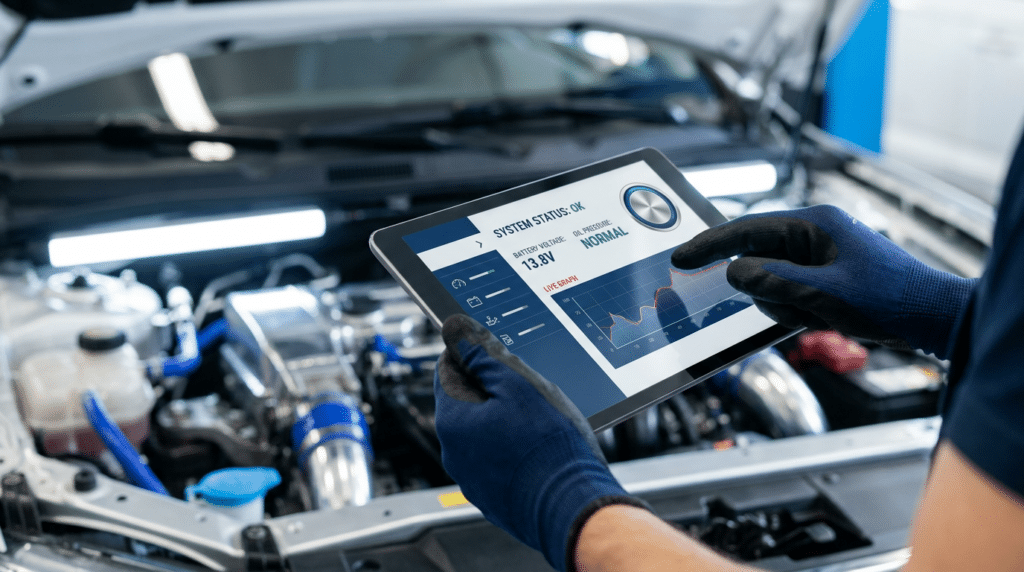
A person wearing gloves holds a tablet displaying a stress-free diagnostic process for car system diagnostics in front of an open car hood in a workshop.

A person wearing gloves holds a tablet displaying a stress-free diagnostic process for car system diagnostics in front of an open car hood in a workshop.

Fear of a failing transmission is often rooted in the high cost and technical jargon associated with repairs. When your vehicle shudders or hesitates, you deserve a process that replaces guesswork with certainty.

At Ace Auto Repair, our diagnostic method is built on transparency and expertise, ensuring you get clear answers and a repair you can trust. Here is our promise for a stress-free path to resolving your transmission issues.


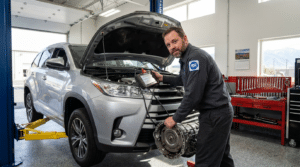
An auto mechanic stands beside a lifted SUV with its hood open, holding a diagnostic tablet and a removed transmission component, showcasing a stress-free transmission repair process in a garage workshop.

Quick Answer

A stress-free transmission repair process begins with a diagnostic you can trust. Our method eliminates guesswork by combining your reported symptoms, advanced computer analysis using tools such as Bosch Diagnostics, and hands-on mechanical inspection by ASE-certified technicians. This allows us to pinpoint the exact cause of the issue, explain your options in plain English, and provide a clear, accurate repair plan before any work begins. The result is a repair that's done right the first time, without the stress of uncertainty.


Table of Contents


Understanding Your Transmission Troubles: It Starts with Trust

That sinking feeling when your car starts acting up is real. The hesitation between gears, the clunking noise, the check engine light glaring from your dash—these aren't just mechanical issues; they're major sources of anxiety. For most drivers, the biggest fear isn't the repair itself, but the process of getting it diagnosed.


The 'Overwhelmed Driver' Dilemma: Why You Need Clear Answers

You’re worried about being exploited. It’s the core pain point for the "Overwhelmed Driver": you know something is wrong, but you don't have the technical expertise to know what, why, or how much it should cost to fix. You’re at the mercy of the technician's explanation, and if that explanation is full of jargon and vague possibilities, it’s impossible to make a confident decision.

This is where trust breaks down. Shops that recommend a full transmission replacement without a thorough diagnostic aren’t serving you; they’re taking the easy (and most expensive) route. The truth is, many transmission problems are fixable. A faulty solenoid, a worn-out clutch pack, or a failed sensor can often mimic total failure, but cost a fraction of the price to repair. Without a detailed report, you can't know the difference.

We designed our diagnostic process specifically for you. We provide clear, simple explanations and prioritize repair options whenever possible. As one of our customers, Amelia Jenkins, noted, we provide "good explanations of things needing to be fixed and the order of the need to fix them." This empowers you to decide what’s right for your budget and your vehicle, putting you back in control.

Don't guess what's wrong. Get a clear, professional diagnosis for your transmission repair.


Our 5-Step Diagnostic Promise: Transparency from Start to Finish

A reliable repair starts with a reliable diagnosis. We’ve eliminated the ambiguity from transmission service by creating a five-step process that guarantees you get clear, actionable answers. This isn't just about finding the problem; it's about building your confidence every step of the way.


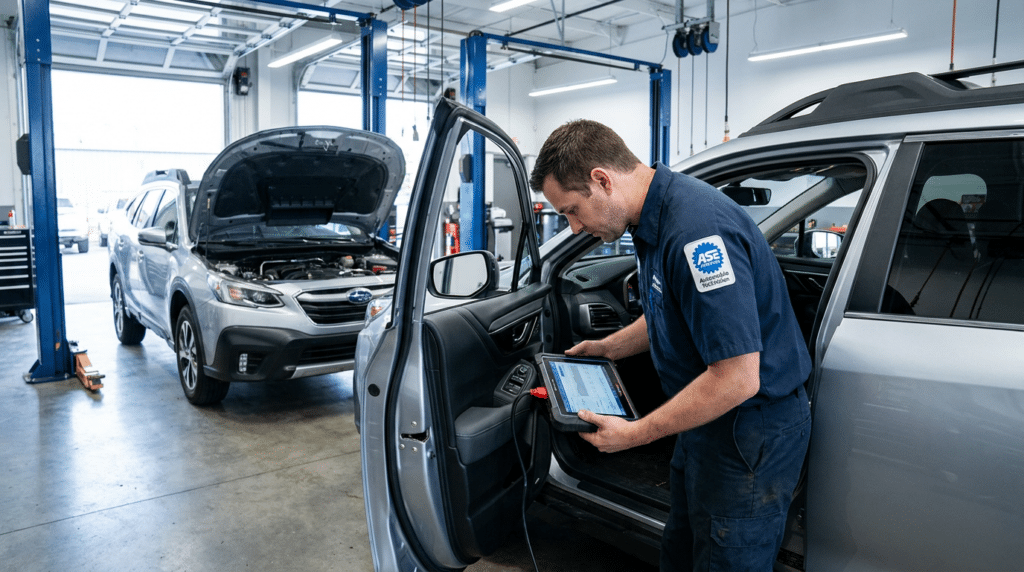
A mechanic uses a diagnostic tablet inside a car, ensuring a stress-free diagnostic process, while another car with its hood open is parked nearby in an auto repair shop.


Step 1: Listening to Your Concerns & Initial Assessment

Our diagnostic process starts with you. Before we ever touch your vehicle, we listen. When did the problem start? What does it feel like? Does it happen when the engine is cold or warm? Your experience driving the car provides critical clues that computers can't. This initial conversation is the foundation of an accurate diagnosis.


Step 2: Advanced Computer Diagnostics & Road Tests

Next, our ASE Certified technicians connect your vehicle to advanced On-Board Diagnostics (OBD-II) scanners. We use professional-grade equipment, including Bosch diagnostic tools, to retrieve Diagnostic Trouble Codes (DTCs) from your transmission control module. But we don't stop there. A code is a symptom, not a diagnosis. To confirm the issue, we perform a road test to replicate the problem you described, paying close attention to shift points, sounds, and performance.


Step 3: Pinpointing the Problem – No Guesswork Involved

Here’s where expertise makes all the difference. Combining your report, the computer data, and the road test findings, we perform a hands-on inspection. This may involve checking the transmission fluid level and condition, inspecting for leaks, and testing electrical components like solenoids and sensors. We use industry databases like Alldata Repair to cross-reference symptoms with manufacturer-specific known issues. This methodical approach ensures we identify the root cause, not just a symptom.

Pro Tip: Never trust a diagnosis based solely on a trouble code. A code for "incorrect gear ratio," for example, could be caused by anything from low fluid to internal mechanical failure. A complete check is the only way to know for sure.


Step 4: Decoding Your Transmission Repair Options (No Jargon, Just Facts)

Now we present our findings. We'll show you what we discovered and explain it in plain English. No jargon, no confusing technical terms. You’ll see a clear, prioritized list of options, which could range from a minor repair to a complete replacement. We’ll walk you through the pros and cons of each, including cost, longevity, and warranty coverage.


Step 5: Your Personalized Plan – Repair vs. Replace Decisions Made Easy

The final decision is always yours. Based on our findings, we provide a personalized recommendation and a free, detailed repair quote. Whether it's a simple fix to get you back on the road in Riverton or a more significant repair for a work vehicle that runs through South Salt Lake, you will have all the information needed to make the best choice for your situation. Our goal is to give you a definitive solution, not an open-ended guess.

End the uncertainty. Schedule your 5-step transmission diagnostic today.


Is It Cheaper to Repair or Replace Your Transmission? (And Is It Worth Fixing?)

This is the most common question we hear, and the answer is critical to your budget. The short answer: repairing a transmission is often significantly cheaper than replacing it. However, the "right" choice depends entirely on the nature of the problem, the age of your vehicle, and your long-term goals.


Navigating the Repair vs. Replace Cost Equation

A full transmission replacement is the most expensive option, often running into thousands of dollars for parts and labor. This is why a thorough diagnosis is so important. Many issues that seem catastrophic can be resolved with targeted repairs.

  • Minor Repairs ($): Issues like a leaking gasket, a faulty speed sensor, or a bad shift solenoid are relatively inexpensive to fix. These repairs can often be done without removing the entire transmission from the vehicle.
  • Major Repairs / Rebuild ($$): If internal components such as clutches or gears are worn, a transmission rebuild may be the best option. In this process, we disassemble the transmission, replace only the failed parts, and reassemble it to factory specifications. This is more labor-intensive but still typically costs less than a full replacement.
  • Full Replacement ($$$): This is reserved for cases of severe internal damage, such as a cracked case or widespread component failure. While it’s the most expensive route, it sometimes offers the best long-term value, especially if it comes with a strong warranty.


When is Transmission Repair a Smart Investment?

Deciding if a transmission is worth fixing comes down to simple economics. If the cost of the repair is a fraction of the vehicle's total value and you plan to keep the car for several more years, repairing it is almost always the smart move. For example, spending $1,500 to repair the transmission on a $10,000 car makes perfect financial sense.

Conversely, if your vehicle is near the end of its life and has multiple other issues, investing thousands in a new transmission may not be wise. We provide honest advice to help you make this call. Our ASE Certified technicians give you the straight facts on your vehicle’s overall health, so you don’t put good money into a failing car.

See exactly what your options are. Request your free, no-obligation repair quote.


Why Choose Us for Your Transmission Repair Diagnostics?

When you're facing a major repair, you need a partner you can trust. At Ace Auto Repair, our entire business is built on a foundation of expertise, transparency, and a commitment to our West Jordan community. We're not just fixing cars; we're building long-term relationships.


Experienced Technicians, Modern Tools

Our technicians are the core of our promise. They aren't just mechanics; they are career professionals who have earned their Automotive Service Excellence (ASE) certifications. This isn't just a piece of paper—it's verifiable proof of their skill, knowledge, and commitment to ongoing training. It means they understand the complex systems in modern vehicles, from the latest 10-speed automatics to advanced CVTs.

We arm these experts with the best tools for the job. Our shop is equipped with manufacturer-level diagnostic platforms and access to complete repair databases. This combination of human expertise and advanced technology allows us to diagnose issues faster and more accurately than general repair shops.


Our Commitment to Honest Auto Repair & Fair Pricing

Honesty is at the center of everything we do. It’s why so many of our customers find us after searching for an "honest and excellent mechanic," as one reviewer put it. We believe in showing, not just telling. You’ll receive a clear, itemized quote before we begin any work. There are no hidden fees or surprise charges. Ever.

We also stand behind our work. Many repairs come with a warranty on parts and labor. We were thrilled when one customer, Shaun Olsen, shared that we "reminded me the parts and service were covered by the warranty" when a part failed. That's our commitment in action—we serve you even after you've paid the bill. It's how we've become a top-rated auto shop in West Jordan, serving drivers from all over the Salt Lake Valley.

Experience the difference honest service makes. Talk to our expert team today.


A mechanic in a blue jumpsuit inspects the underside of a car using a flashlight while the vehicle is lifted on a hydraulic car lift, beginning a stress-free diagnostic process for potential transmission repair.


Common Questions About Transmission Repair & Diagnostics

What are the common signs I need transmission repair?
The most common signs include a lit Check Engine light, slipping or grinding sensations during gear shifts, delayed or harsh engagement when you move from Park to Drive, and leaking reddish or brownish fluid under your car. You might also notice unusual whining, clunking, or humming noises. If you experience any of these, it's best to get a diagnostic check promptly, as ignoring them can lead to more severe damage.
How long does a transmission diagnostic take?
An initial diagnostic, which includes a road test, computer scan, and visual inspection, typically takes between 60 to 90 minutes. This is usually enough time to identify the most common problems. If the issue is complex or intermittent, it may require more in-depth testing, which could take several hours. We always communicate the expected timeline with you upfront.
Will I get a clear estimate before any work begins?
Absolutely. We provide a detailed, line-item estimate for all recommended repairs after the diagnostic is complete. You will see a full breakdown of parts and labor costs. We will not perform any work on your vehicle without your explicit approval of that estimate. This is a core part of our commitment to transparent and honest service.
What if my transmission fluid is low or contaminated?
Low transmission fluid can definitely cause stuttering, hesitation, and overheating, as it's essential for hydraulic pressure and cooling. This is often the result of a leak. Contaminated fluid (dark, burnt-smelling) is a symptom of a larger problem, usually excessive heat buildup, which is the number one killer of automatic transmissions. In either case, simply topping off or changing the fluid is not a complete fix; we must diagnose and repair the underlying cause—the leak or the source of the overheating—to ensure a lasting solution.


The Bottom Line

  • Stress comes from uncertainty. The fear of a big, unexpected bill and not trusting the diagnosis is worse than the repair itself.
  • A process builds trust. Our 5-step diagnostic method is designed to give you clear, honest answers and put you in control.
  • Repair is often the smartest option. A full replacement isn't always necessary. A proper diagnosis can identify smaller, more affordable fixes that save you money.
  • Expertise is not optional. Your complex modern transmission requires ASE Certified technicians and advanced tools to be diagnosed correctly the first time.

By focusing on a transparent process, we turn a stressful situation into a manageable one with a clear path forward.


Ready for Stress-Free Transmission Repair? Schedule Your Diagnostic Today!

Don't let the fear of a transmission problem keep you sidelined. Driving with a faulty transmission isn't just stressful; it's unsafe and can lead to far more expensive damage down the road. You deserve clear answers from an expert team that has your best interests at heart.

Our complete diagnostic process is the first step toward peace of mind. Let our ASE Certified technicians pinpoint the exact issue and provide you with a clear, honest, and affordable plan to get you back on the road with confidence. Stop guessing and start driving.


Schedule Your Appointment

Related Reads: