
A car's air conditioning failing on a hot day is more than an inconvenience. It’s a fast track to a miserable commute, especially during a scorching Utah summer. If your AC is blowing warm air, the most common causes are low refrigerant, a failing compressor, or an electrical fault. Understanding the source of the problem is the first step to getting back to a cool, comfortable drive. This guide breaks down the common culprits behind a warm AC. We’ll cover what you can safely check yourself and explain when it’s time to let a certified professional take over. We will help you diagnose the issue and find the right solution.
Quick Answer
- Low Refrigerant: The most frequent cause of warm AC is a leak in the system.
- Faulty Compressor: The AC compressor is the heart of the system. If it fails, the refrigerant cannot circulate.
- Electrical Issues: Blown fuses, bad relays, or damaged wiring can prevent the AC components from turning on.
- Clogged Components: A blocked condenser or cabin air filter restricts airflow and heat exchange, reducing cooling performance.
Table of Contents
Understanding Your Car's AC System: A Quick Overview
Your car's air conditioning is a closed-loop system that uses pressure changes to cool the air. It works much like your home refrigerator, transferring heat from inside the cabin to the outside air. Though it seems like magic, it relies on a few key parts working together perfectly.
Key Components of Your Car's Air Conditioning
Think of your AC as a team. If one player is out, the whole team suffers. Here are the main components responsible for delivering cold air:
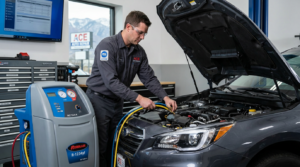
- Compressor: This is the engine-driven pump that pressurizes the refrigerant (like R-134a or the newer R-1234yf) and circulates it through the system.
- Condenser: Located at the front of the car, usually near the radiator, it dissipates the heat absorbed from the cabin. It turns the high-pressure refrigerant gas back into a liquid.
- Evaporator: Hidden inside the dashboard, this component absorbs heat and moisture from the cabin air as the liquid refrigerant expands back into a gas, cooling the air.
- Refrigerant: This is the specialized chemical compound that actually does the cooling. Without the correct amount and type, the system cannot function.
- Receiver/Drier or Accumulator: This part removes moisture from the refrigerant, preventing corrosion and system freeze-ups.
Common Reasons Why Your Car AC Is Blowing Warm Air
A warm AC almost always points to a specific failure within this system. Our ASE-certified technicians in West Jordan diagnose these issues daily. Here are the most common culprits we find.
Low Refrigerant (Freon) Levels
Low refrigerant is the number one reason an AC blows warm air. Your AC system is sealed, so if the level is low, it means there is a leak. Refrigerant doesn't "get used up" like gasoline. Think of it like the blood in your veins; you only lose it if there's a wound.
Refrigerant Leaks
Leaks are the root cause of low refrigerant. They can be tiny and difficult to spot, often occurring at hose connections, seals, or due to condenser corrosion. Over time, even a small leak will drain enough refrigerant to stop the system from cooling. We use specialized UV dye and electronic "sniffers" to pinpoint the exact source of a leak, ensuring a permanent fix.
Malfunctioning AC Compressor or Clutch
The compressor is the heart of your AC, so its failure is critical. It can fail internally due to age or a lack of lubrication (often caused by a refrigerant leak). You might also have a failed compressor clutch, which is the part that engages and disengages the compressor pulley from the engine belt. If the clutch won't engage, the compressor won't run.
Clogged Condenser or Evaporator
Your condenser sits at the front of your car and can get clogged with road debris, such as leaves, dirt, and bugs. A clogged condenser cannot release heat effectively, crippling the AC's performance. An internally clogged evaporator core can also restrict refrigerant flow, leading to warm air from the vents.
Electrical System Issues (Fuses, Relays, Wiring)
Modern AC systems rely on a network of sensors, fuses, and relays. A simple blown fuse can shut down the entire system. More complex issues, like a faulty pressure switch or damaged wiring, can send incorrect signals and prevent the compressor from turning on. Diagnosing these requires a systematic approach, much like the process used to pinpoint issues during transmission repair diagnostics.
Broken Blend Door Actuator
Sometimes, the AC system is making cold air, but it's not reaching your vents. The blend door is a flap inside your dashboard that directs airflow. A broken or stuck blend door actuator can block the cold air or mix it with hot air from the heater core, resulting in lukewarm temperatures. You might hear a clicking or ticking sound from the dashboard when this component fails.
Dirty or Clogged Cabin Air Filter
A severely clogged cabin air filter can reduce airflow so much that it feels like the AC isn't working. While it doesn't stop the system from producing cold air, it prevents that air from getting into the cabin effectively. This is one of the easiest issues to check and resolve yourself.
Cooling Fan Problems
The electric cooling fans (or engine-driven fan) pull air through the condenser to help dissipate heat. If a fan fails, the condenser can't do its job, especially when you're stopped in traffic. This often leads to an AC that works on the highway but blows warm when you're idle.
Quick Fixes and DIY Solutions for Warm AC
While most AC issues require professional tools and knowledge, there are a few things you can safely check at home before scheduling a service. These simple steps can sometimes solve the problem or at least help you provide better information to your mechanic.
Checking and Topping Off Refrigerant (With Caution)
This is where most DIY attempts go wrong. While "AC recharge" kits are sold at auto parts stores, we strongly advise against them. Using one is a gamble.
Pro Tip: Overcharging your AC system with a DIY can is just as bad as undercharging it. Too much pressure can damage the compressor and other components, leading to a far more expensive repair. Plus, these kits don't fix the underlying leak.
Modern vehicles (typically 2015 and newer) use a different refrigerant called R-1234yf, which is not compatible with older systems and requires specialized equipment. Ace Auto Repair is one of the few shops in the Salt Lake Valley fully equipped to service these newer, eco-friendly systems.
Inspecting and Replacing the Cabin Air Filter
This is a safe and simple DIY task. Your owner's manual will show you where the cabin air filter is located, usually behind the glove box. If it's black with dirt and debris, replacing it can significantly improve airflow and is an inexpensive fix. A clean filter also improves the air quality inside your car.
Basic Electrical Checks: Fuses and Relays
You can also check the fuse box for a blown AC fuse. Your owner's manual or the fuse box lid will have a diagram showing which fuse corresponds to the air conditioning system. Pull the fuse out and inspect it. If the metal strip inside is broken, replace it with a new fuse of the exact same amperage. This can sometimes be a quick, lucky fix.
When to Seek Professional Car AC Repair
If the simple checks don't restore your cold air, it's time for professional help. Trying to fix complex AC issues without the right training can cause more damage and cost you more in the long run. Our customers often tell us they appreciate how we explain what needs to be fixed and why, giving them confidence in the repair.
Diagnosing Complex Leaks or Component Failures
Professionals have the right tools for the job. We use fluorescent UV dye that circulates with the refrigerant to visually pinpoint even the smallest leaks with a blacklight. We also use electronic refrigerant sniffers that can detect leaks invisible to the naked eye. Accurately diagnosing a failing compressor or a blocked evaporator requires experience and diagnostic equipment such as Bosch Diagnostics systems.
The Importance of Certified AC Technicians
Working on AC systems isn't just a mechanical task; it's a legal one. Handling refrigerants requires specific EPA Section 609 certification to prevent environmental damage. Our ASE-certified technicians have this training, ensuring your vehicle is repaired correctly, safely, and legally.
As one customer, Rett Johnson, noted in a 5-star review, "Even though it was a higher price than other shops quoted, you get what you pay for." This highlights the value of expert service. A cheap fix that doesn't last is no bargain. When you bring your car to our shops in West Jordan or our other locations serving areas like Riverton, you're paying for a lasting solution.
Preventative Maintenance to Keep Your AC Cold
The best repair is the one you never have to make. A little preventative care can go a long way in keeping your air conditioning system running reliably for years. Don't wait for it to fail on the hottest day of the year.

Regular AC System Checks
Engage your AC system periodically, even during the winter. Run it for about 10 minutes once a month. This helps circulate the refrigerant and oil, keeping seals lubricated and preventing them from drying out and cracking, which is a common source of leaks.
Seasonal AC Servicing
We recommend a professional AC performance check before summer hits. An expert can measure system pressures, check refrigerant levels, and inspect components for wear and tear. Finding a small issue early, like a worn belt or a minor leak, is much more affordable than replacing a failed compressor later. Ask about an AC check during your next oil change or service appointment.
FAQs About Car AC Blowing Warm Air
We hear these questions all the time at our shop. Here are some straightforward answers from our experts.
How do I fix my AC blowing warm air in my car?
First, check the simple things: ensure the AC button is on and the temperature is set to cold. Check for a clogged cabin air filter and look for obvious obstructions on the condenser at the front of the car. If these aren't the issue, the problem is likely low refrigerant due to a leak, a bad compressor, or an electrical fault, all of which require a professional diagnosis. The best first step is to get a free repair quote to understand the exact problem.
What is the 3-minute rule for AC?
The "3-minute rule" is a piece of automotive folklore suggesting you should wait three minutes after starting your car before turning on the AC. The theory is that this allows the engine to warm up and stabilize. While it won't harm anything, modern cars are strong enough to handle the AC turning on immediately. It is not a diagnostic tool or a required practice.
What causes my car's AC to blow warm air?
The most common cause is a refrigerant leak, resulting in low refrigerant levels. Other major causes include a failed AC compressor, a clogged condenser, electrical problems like a blown fuse, or issues with the blend door that directs airflow.
Is it safe to drive with warm AC?
Yes, it is generally safe to drive your car if the AC is only blowing warm air. The failed AC system will not affect your car's engine performance or safety systems. However, if the compressor has seized, it could cause the serpentine belt to break, which would be a major problem as this belt often runs the alternator and water pump. If you hear squealing or grinding noises when you turn on the AC, it's best to leave it off and have it inspected immediately.
The Bottom Line
A car AC blowing warm air is a solvable problem. While a few issues can be resolved with simple checks, most require the expertise and tools of a certified technician. Ignoring the problem or attempting a risky DIY fix often leads to more significant and expensive damage. Taking a systematic approach will get your cool air back faster and more reliably.
Don't Sweat It, Get Your AC Fixed!
A working air conditioner is essential for driving comfortably and safely in the Salt Lake Valley. Whether you're commuting through West Valley City or running errands in South Salt Lake, you deserve a cool ride. Don't put up with a faulty AC system any longer.
Our team of ASE-certified mechanics has the expertise to accurately diagnose and repair any AC issue, from simple leaks to complex electrical faults. We pride ourselves on honest, reliable auto repair that our customers trust. We'll find the root cause of the problem and explain your options clearly, just as customers like Cody Wright praised when he said our shop "exceeded my expectations... If you want high-quality work without the runaround, this is the place to go!"
Let us restore your comfort so you can drive with confidence. Contact Ace Auto Repair today for your free, no-obligation repair quote and get back to enjoying a cold, refreshing drive.










 Ace Auto Repair
Recent Comments