How to Top Off Your Car's Air Conditioning System

West Jordan Air Conditioning System Repair

AceAuto_How-to-Top-Off-Your-Car_AirConditioningSystem

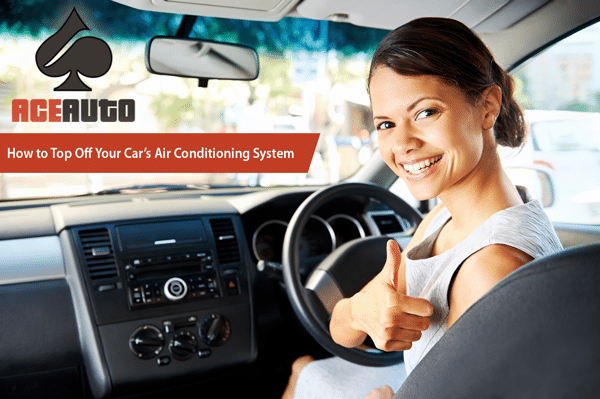
It’s summertime and the living should be easy. That is, if the air conditioning in your car is working properly. Before you get hot and bothered by an A/C that isn’t keeping you cool, take time to go over a few basic steps. There are some parts you can check yourself to see if you can get it going again.

Buying a Recharge Kit

At the first sign of a unit that’s not functioning properly, go to your auto supply store and pick up an A/C Recharge Kit. Open the kit and read through the directions. Follow them carefully and see if the kit will solve the problems you are having. It is possible that by recharging your air conditioning it will start blowing cool air again.

Checking the Pressure Sensor

Another place you want to look is in the pressure sensor. Check your unit and try to locate the low pressure sensor to make sure that it is working as it should be. You can check the current pressure using a special gauge. If you see that the pressure is low, fill it using the recharge kit. Follow the instructions carefully so you are sure to fill it to the correct pressure. Once you start filling it, stop every 10-15 seconds so you can take another reading using the pressure gauge. This will give you the current level. Keep starting, stopping and checking until the gauge shows that you have reached the correct level of pressure.

Analyzing the Compressor Clutch

Check that your air conditioning unit’s compressor clutch is engaging. However, there are several things that can go wrong with this part of the unit. Depending on the problem, repairs can range from inexpensive to replacing the whole compressor clutch. For instance, if it is not engaging properly or if it is making a noise, there can be many causes and it is not always easy to pinpoint the exact reason. An example of these problems could be a clogged condenser, a faulty condenser fan, pressure that is too high or even an overcharge. In any of these instances, it is important to evaluate the entire air conditioning system to know which pieces need to be replaced.

Filling the AC Compressor

Once you've determined your compressor clutch is functioning, and your pressure is low, attach the recharge kit to the low pressure sensor and begin filling, checking the pressure gauge every 5-10 seconds. Once the pressure reaches 'normal' levels, go take a seat in your car and see if it's blowing cool air again. If it is, then you're done!

When to Get Help from a Professional

After trying to evaluate and fix the problems you are experiencing with your car’s AC, go ahead and turn it on and see if you have fixed it. If it is now blowing cold air, you did it! Get in and enjoy! However, if the unit is still not blowing cold air, it is time to take it to a specialist. Contact Ace Auto Repair today for a Free A/C repair estimate.

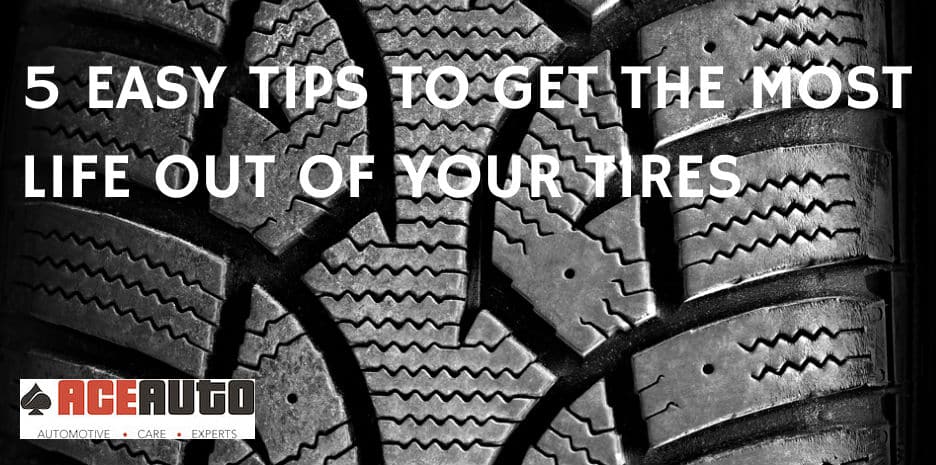
5 Easy Tips to Get the Most Life Out of Your Tires

5 easy ways to maximize tire lifespan without visiting a mechanic or needing extensive auto repair.

Get the Most Life of Tires - Ace Auto Repair in West Jordan

Your tires are a critical, but often overlooked part of your automobile. Knowing what to look for, and why you are looking for it, can help you understand the importance of proper tire care. We’ve put together a list of five tips to help you get the most out of your tires.

  1. Check Your Tire Pressure Frequently

    Keeping your tires properly inflated can help your tires last longer, improve your vehicle’s handling and provide maximum safety for you and your passengers. If those reasons aren’t good enough, maybe the next reason will be. Tires that are properly inflated will help you improve your gas mileage and save on fuel. Your proper inflation level can be found in your owner’s manual, on the vehicle placard, usually inside the drivers-side door, or on the tire itself. Remember, over-inflating can be just as adverse as under-inflation so keep an eye on your tire pressure with an inexpensive tire gauge.

  2. Get Your Tires Rotated

    Road conditions, tire inflation, and the location of your tires on your vehicle will all affect how your tires wear. Having your tires rotated is where your tires are “rotated” to different positions around your car. This provides for more even wear and longer tire life.

  3. Balance Your Tires

    Like most things created by man, tires and the rims they are mounted on are not perfect. To perform better on the road however “balancing” can help create a better balance to them. This not only improves your tire wear, but it will help tires wear more evenly. If you notice a slight shaking or vibration in your car, it could be that your tires need balancing. Balanced tires can eliminate that shaking which will also save wear and tear on the vehicle itself.

  4. Get Tire Problems Fixed Fast

    Nothing good can come out of procrastinating when it comes to tire issues. Un-addressed tire issues can lead to everything from an inconvenient roadside flat to a dangerous hi-speed blowout. That leads us to our fifth and final tip to help you get the most out of your tires…

  5. Check Your Tire Tread Often

    Your tire’s tread is your best indication of what is going on with your tires. It is why you should check your tire’s tread frequently. If a front tire appears to be wearing unevenly it could be your wheels need alignment. Not only keep an eye on your tire’s wear, but occasionally check your tire for any foreign objects.

When you need help with an auto or truck repair, we invite you to contact us. We offer complete auto repair services throughout the Salt Lake Valley, Utah area. We service all makes and models. From small repairs to a complete engine exchange, we take pride in doing it right the first time.

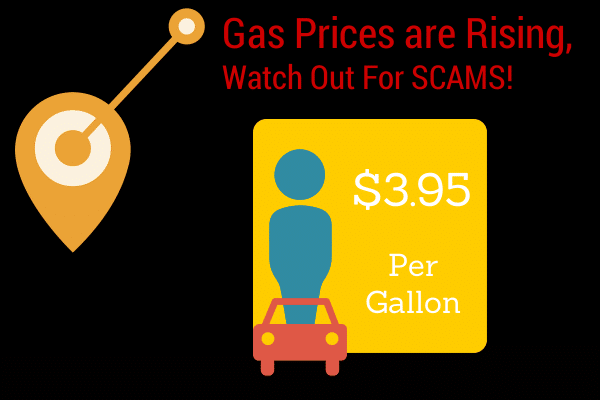
As Gas Prices Increase, so do the Number of Scams!

Watch out for auto repair scams as gas prices rise.

Ga Prices Graphic - Ace Auto Repair

Gas prices are reaching all-time highs. So too is the volume of advertising for "gas-saving" products, designed to appeal to consumers looking for ways to improve fuel efficiency. Although there are practical steps car owners can take to increase gas mileage, the Better Business Bureau warns consumers to be wary of gas-saving claims for automotive devices or oil and gas additives. While some of the gas-saving products have been proven to work, the savings are small, at best. What’s more, you could end up with serious engine problems or a voided manufacturer warranty by adding after-market devices to your engine. The BBB recommends being particularly skeptical of the following kinds of advertising claims:


  • "Product improves fuel economy by 20 percent." The Environmental Protection Agency has evaluated or tested more than 100 alleged gas-saving devices and has not found any product that significantly improves gas mileage. In fact, some "gas-saving" products may damage a car's engine or cause substantial increases in exhaust emissions. Some of these products include Air Bleed Devices, Vapor Bleed Devices, Liquid Injection, Fuel Line Devices, Mixture Enhancers, Internal Engine Modifications and more.
  • "I got an extra 4 miles per gallon with your product." Although ads may feature glowing customer testimonials, consumers should keep in mind that few people have the ability or the equipment to test for precise changes in gas mileage after installing a gas-saving product.
  • "Approved by the Federal Government." No government agency endorses gas-saving products for cars. However, the EPA has reached certain conclusions about possible gas savings by testing or evaluating the product.

Instead of searching for miraculous gas-saving products, the BBB recommends that consumers consider taking one or more of the no-cost or low-cost actions that can help drivers save on gas consumption. The most important place to start is at the gas pump; buy only the octane level gas you need. Check your owner's manual to determine the right octane level for your car. Here are more tips from the BBB to help you get better gas mileage:

  • Drive more efficiently. Stay within posted speed limits. Gas mileage decreases rapidly at speeds above 60 miles per hour.
  • Avoid "jackrabbit" starts and stops. Accelerate slowly when starting from a dead stop. Don’t push the pedal down more than one-quarter of the way; this allows the carburetor to function at peak efficiency. You can improve gas mileage up to five percent around town if you avoid jerky starts and stops.
  • Use overdrive gears and cruise controls when appropriate. They improve the fuel economy of your car when driving on a highway.
  • Keep windows closed when traveling at highway speeds. Open windows cause air drag, reducing your mileage by 10 percent.
  • Avoid rough roads whenever possible. Dirt or gravel can rob you of up to 30 percent of your gas mileage.
  • Remove excess weight from the trunk. An extra 100 pounds can reduce a typical car’s fuel economy by up to two percent.
  • Properly maintain your car. Keep the engine tuned, tires inflated and aligned, change the oil on schedule, and check and replace air filters regularly. Replacing clogged filters can increase gas mileage up to 10 percent.

Ace's Automotive Maintenance Tips

A car displaying maintenance tips, useful for auto repair and mechanic professionals.

MaintenanceTips

  • Have tire wear, fluid levels, and exterior lights checked regularly.
  • Perform oil changes every 3 months or 3,000 miles, which ever comes first.
  • Perform cooling system services, transmission services, and rear differential services every 2 years or 20,000 miles, or as recommended by your service manual. These services are best performed during the spring and fall seasons.
  • Do not ignore your vehicle's warning lights; they light up for a reason. Warning lights may be yellow in color to signify the need for attention soon, or may be red to signify the need for immediate attention.
  • A Check Engine light, often yellow in color, may signify a potential mechanical, electrical, or computer failure. Check Engine lights may be related to vehicle emissions, which can result in lowered gas mileage.
  • Check Engine lights may or may not be accompanied by drivability problems such as sputtering, rough idle, or loss of power.
  • An Oil, Brake, or Coolant light, red in color, may signify the need for immediate attention due to a low fluid level, or a mechanical or hydraulic failure in that system. These types of problems may be accompanied by other symptoms such as a puddle of fluid underneath the vehicle.
  • Regardless of the warning light or color, pay attention to what your vehicle tells you. Refer to your owner's manual or call Ace Auto Repair at (801) 803-6016 for questions. This will help to ensure the safety and longevity of your vehicle